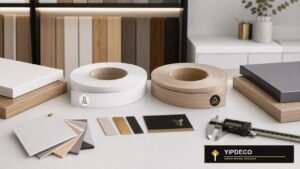
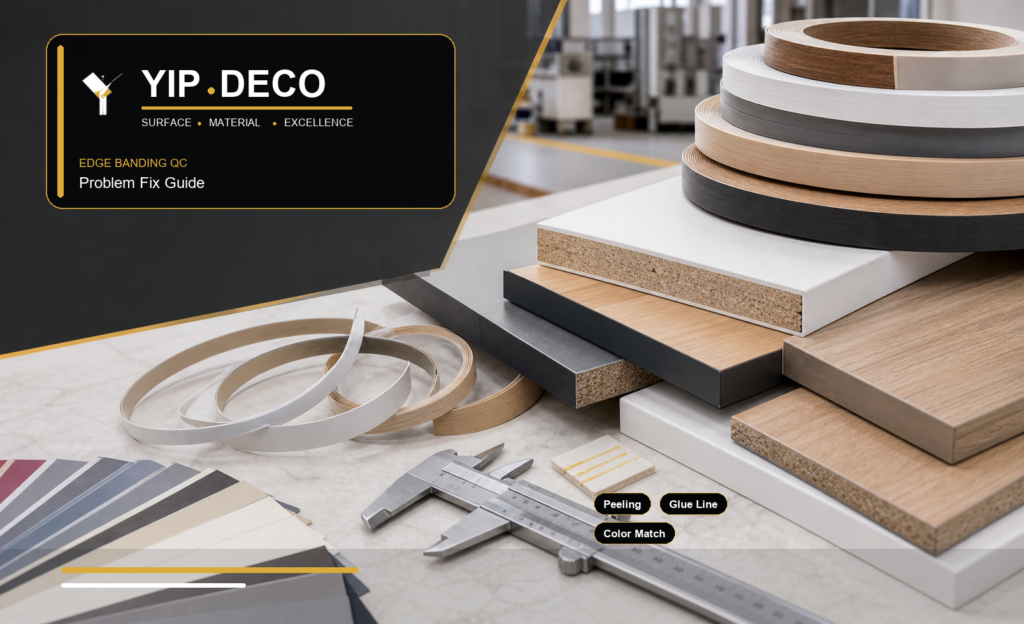
Edge banding looks like a small detail on furniture panels, but for furniture factories, cabinet makers, and project suppliers, it can directly affect product quality, production efficiency, and customer satisfaction. If the edge banding peels off, shows a visible glue line, or does not match the panel color, the final product will still look unprofessional.
From our factory and export experience, edge banding problems are rarely caused by one single reason. A roll that looks good in the sample room may behave differently after gluing, trimming, scraping, polishing, packing, and long-distance shipping. In many customer cases, the real solution is not simply changing the material, but checking the edge banding, machine settings, adhesive condition, board surface, and packaging together.
In B2B purchasing, edge banding problems are often blamed on the material first. But from real production experience, most problems come from three factors: edge banding quality, machine settings, and working conditions.
Below are six common edge banding problems and practical ways to fix them.
| Problem | Common sign | First thing to check | Why it matters |
|---|---|---|---|
| Peeling off | Edge lifts after pressing or shipping | Glue temperature, roller pressure, board edge cleanliness | Confirms whether bonding failure comes from adhesive, machine pressure, or panel preparation |
| Visible glue line | Dark or thick line between board and edge | Color match, glue amount, trimming quality | Affects finished cabinet appearance, especially on white, black, and high gloss panels |
| Color mismatch | Edge looks different from the board surface | Physical samples, gloss level, texture direction | Photos are not reliable enough for final approval |
| White stress lines | White marks after trimming or bending | Tool sharpness, material hardness, scraper pressure | Helps separate material issues from machine setting issues |
| Rough trimming | Chipping, cracking, uneven edge | Cutter condition and workshop temperature | Reduces rework and production rejects |
| Surface damage | Scratches, gloss difference, pressure marks | Winding tension, film protection, carton and pallet plan | Important for long-distance export and premium furniture projects |
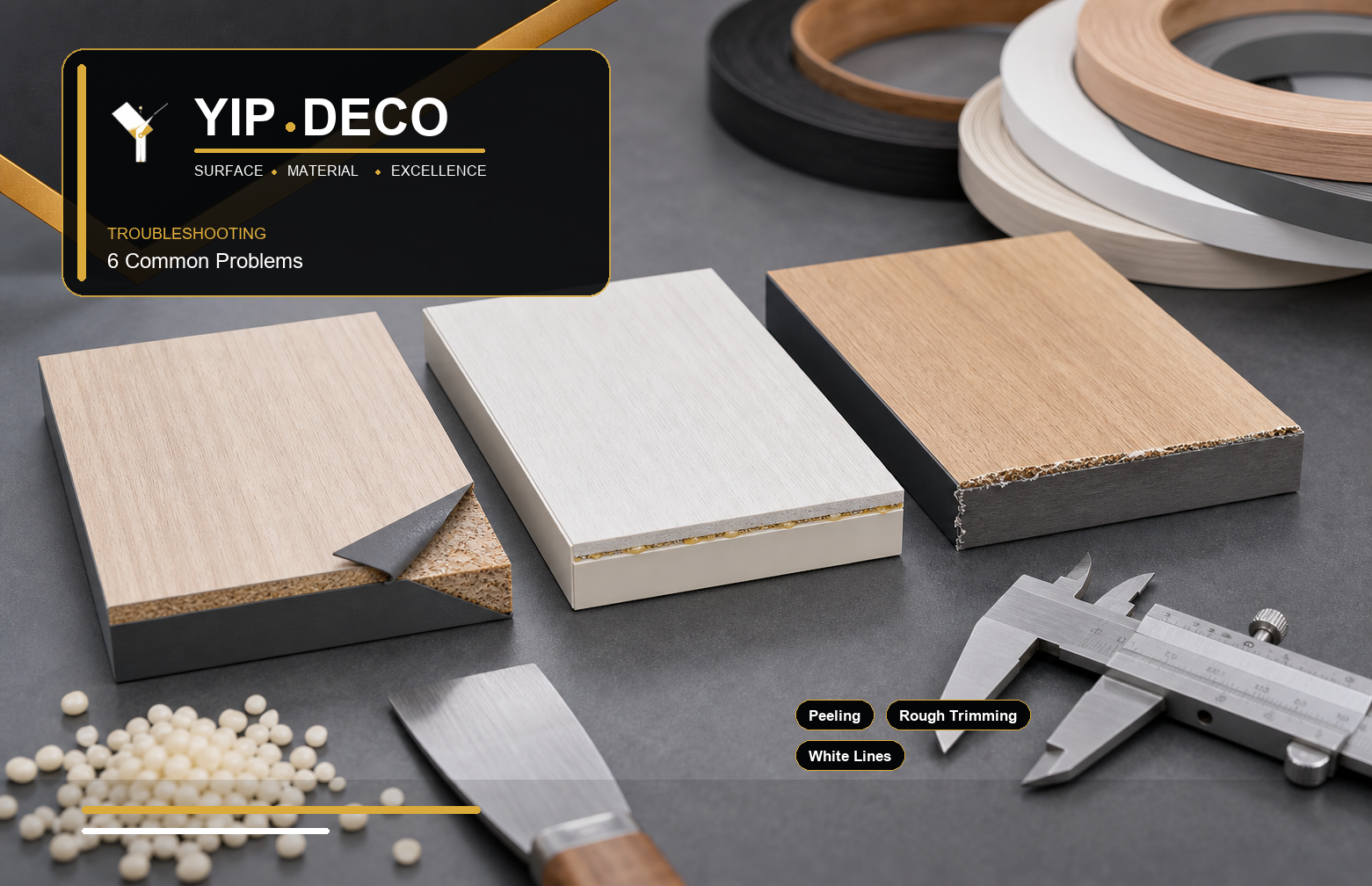
1. Edge Banding Peeling Off
Peeling is one of the most common edge banding problems. It may happen shortly after production, during transportation, or after the furniture has been used for some time. For factories, it can lead to rework, complaints, or project delays.
The first thing to check is adhesive temperature. If EVA glue is too cold, it cannot melt properly and will not create a strong bond. If the temperature is too high, the glue may become too thin or lose part of its bonding performance. PUR adhesive also needs correct operating conditions, although it usually offers stronger moisture and heat resistance after curing.
The second point is panel condition. Dust, moisture, oil, or an uneven cutting surface can reduce adhesion. Even good PVC edge banding, ABS edge banding, or PET edge banding cannot perform well if the board edge is not clean and flat.
Machine pressure is another key factor. If the pressure roller does not press evenly, the edge banding may attach only on part of the surface. This is common when the machine has not been calibrated for a long time. For general machine selection and setup reference, buyers can also review this guide from Woodworking Network.
To fix peeling problems, factories should check glue temperature, glue amount, roller pressure, feed speed, and board edge cleanliness together. If the problem appears only with one color, thickness, or batch, then the edge banding material should also be checked for backside primer quality and surface consistency.
2. Visible Glue Line
A visible glue line can make furniture look cheap, even when the board and edge banding are both good quality. This issue is especially obvious on white, black, high gloss, and solid color panels.
There are several possible causes. One is that the edge banding color is close but not close enough to the board. Even a small color difference can make the glue line look stronger. Another reason is excessive glue application. If too much adhesive is applied, it may squeeze out and create a thick line between the panel and edge banding.
Incorrect trimming can also make the glue line more visible. If the edge banding is not trimmed smoothly, the joint area may catch light differently, especially on high gloss or mirror-like surfaces.
For buyers, the solution starts before bulk production. Ask the supplier to provide proper color matching samples, not only photos. For important projects, the edge banding should be checked under normal indoor light and production lighting.
Factories should also adjust glue amount, pressure, and scraping settings. For premium furniture, laser edge banding or zero-joint solutions may be considered, but for most standard production, a well-matched color and stable machine settings can already reduce the glue line significantly.
3. Color Mismatch Between Edge Banding and Board
Color matching is one of the most important parts of edge banding sourcing. A small mismatch may not look serious on a single sample, but after hundreds or thousands of panels are installed together, the difference becomes very clear.
Color mismatch can happen for many reasons. The board supplier may have changed the paper design or surface finish. The edge banding supplier may match the color based on an old sample. For woodgrain edge banding, matching is not only about color, but also about texture, gloss level, and pattern scale.
A professional supplier should not only say "similar color available". For B2B customers, it is better to work with a supplier who understands Delta E color difference control and can develop custom colors based on real board samples.
For factories, the best practice is to send physical board samples or exact board codes when developing edge banding. Photos are useful for reference, but they are not enough for accurate matching. Lighting, camera settings, and screen display can all change the color.
Before placing a bulk order, buyers should confirm sample rolls and test them on actual panels. If the edge banding will be used for a large project, keep approved samples as a reference for future repeat orders.
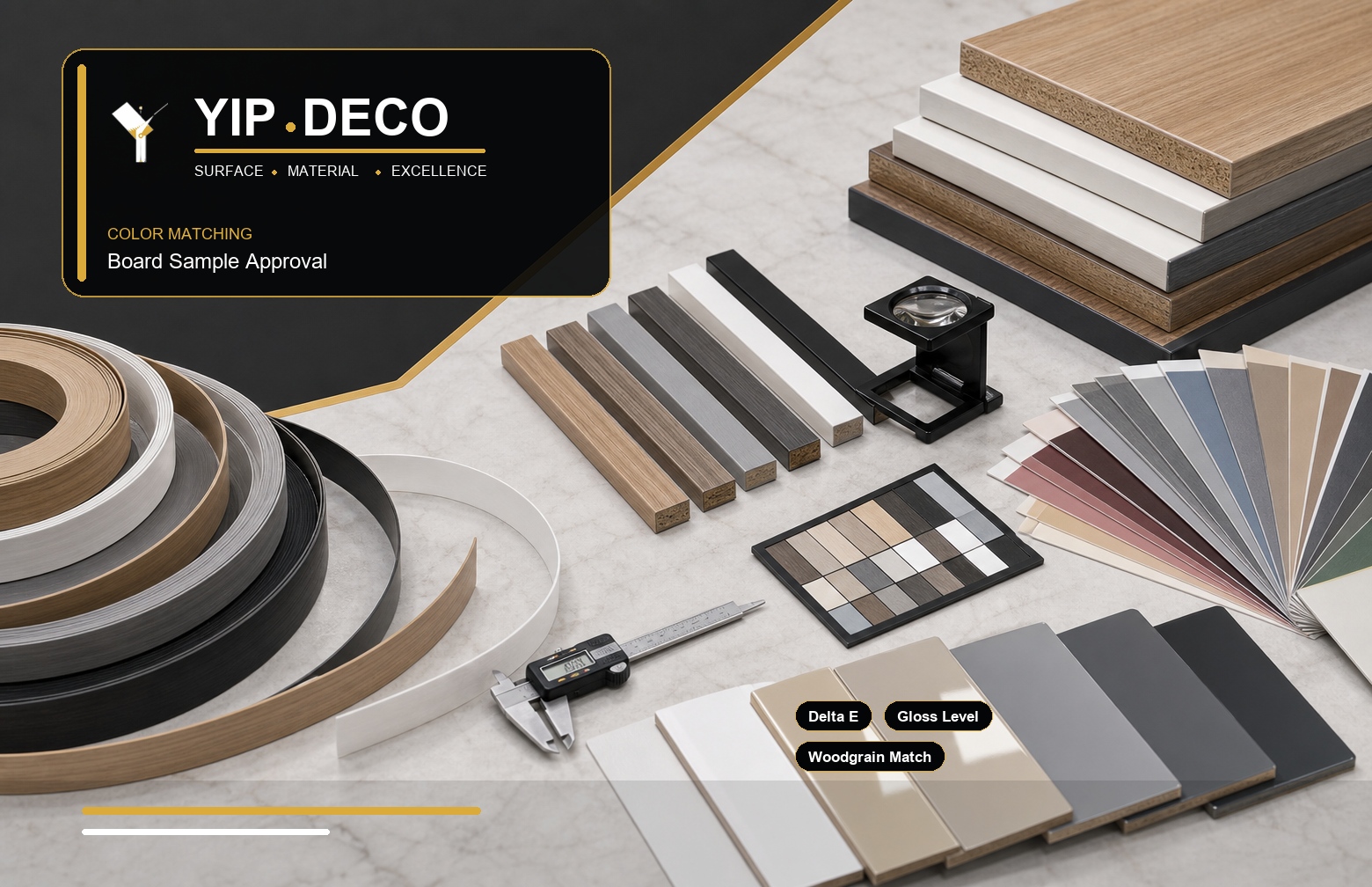
4. White Stress Lines After Trimming or Bending
White stress lines are common on some ABS edge banding and PVC edge banding, especially after trimming, scraping, corner rounding, or bending. These lines usually appear because the material is stressed during processing.
One possible reason is that the edge banding is too rigid for the application. Another is that the trimming knives are not sharp enough, causing the material to be pulled instead of cut cleanly. Incorrect scraper settings can also damage the surface or expose stress marks.
For thicker edge banding, such as 2mm or 3mm, bending radius and machine settings become more important. If the machine applies too much force or the corner rounding tools are not suitable, stress marks may appear at the edge.
To reduce white lines, factories should check tool sharpness, trimming speed, scraper pressure, and corner rounding settings. The material formulation also matters. A stable edge banding supplier should be able to recommend suitable hardness, thickness, and material type based on the customer's production process.
For buyers, it is useful to test sample rolls on the real machine before bulk orders. A sample that looks good by hand still needs to perform well during automatic edge banding, trimming, and polishing.
5. Chipping, Cracking, or Rough Trimming
Rough trimming can make the whole panel look unfinished. Chipping or cracking is more common when the material is brittle, the temperature is too low, or the trimming tools are worn out.
In cold weather, some edge banding materials may become less flexible during processing. If the rolls are stored in a cold warehouse and used immediately, they may crack more easily. This is especially important for customers in colder regions or during winter shipments.
Machine condition is another major reason. Dull cutters, unstable feed speed, or incorrect trimming position can create rough edges. Sometimes the problem is not the edge banding itself, but the machine setup.
To fix this issue, factories should keep cutting tools sharp and check whether the trimming units are aligned correctly. Edge banding rolls should be stored in a stable environment and allowed to reach workshop temperature before use.
From the sourcing side, buyers should choose material suitable for their market and climate. Some projects need better flexibility, while others need stronger impact or scratch resistance. A supplier with export experience can help buyers choose the right specification instead of only comparing price.
6. Surface Scratches, Gloss Difference, or Packaging Damage
Surface appearance matters a lot for high gloss edge banding, soft touch edge banding, mirror finish panels, and premium cabinet projects. Scratches, gloss difference, or pressure marks can create problems before the material even reaches the production line.
Some scratches happen during production or rewinding. Others happen during packing, loading, or long-distance transportation. If rolls are packed too tightly, squeezed by heavy cartons, or exposed to moisture, the surface may be affected.
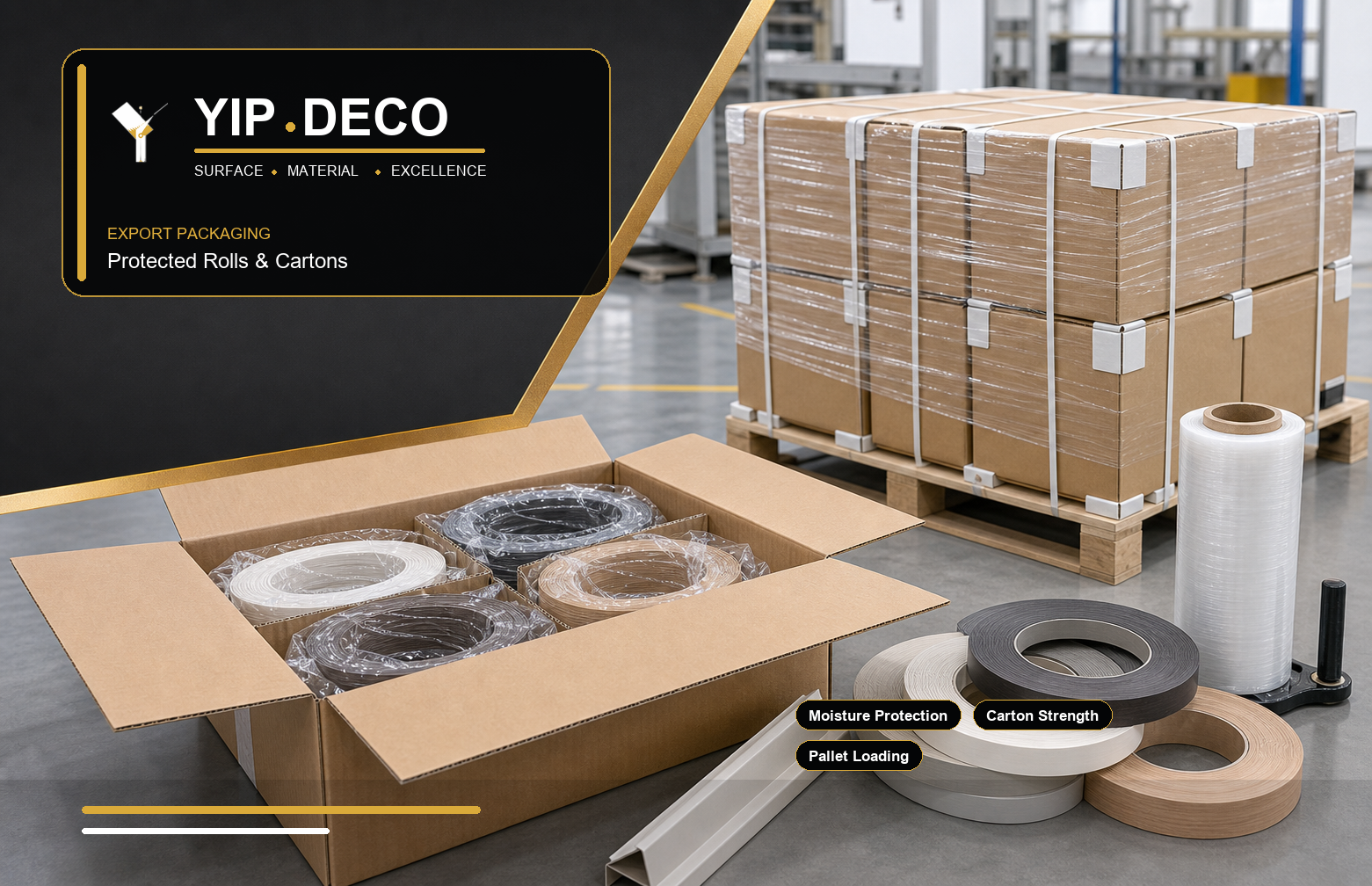
For B2B buyers, packaging should be part of the quality discussion. Edge banding for export needs strong cartons, proper roll protection, clear labels, and suitable pallet loading when required. For mixed colors or custom orders, labels are especially important because wrong sorting can slow down production.
Gloss consistency should also be checked during sample approval. High gloss and soft touch finishes are more sensitive than standard matte edge banding, so buyers should confirm surface feel, gloss level, and scratch resistance.
If surface damage appears often, the supplier should review film protection, winding tension, carton strength, and loading method. For long-distance export, good packaging is not an extra detail. It is part of product quality.
Need matching samples? Ask for Edge Banding Samples
How Buyers Can Prevent Edge Banding Problems Before Bulk Orders
For furniture factories and importers, the best way to reduce edge banding problems is to build a clear checking process before mass production.
First, confirm the material type. PVC, ABS, PET, acrylic, veneer, and other edge banding materials have different performance features. The right choice depends on furniture type, market requirements, budget, and processing method.
Second, confirm thickness, width, color, gloss, texture, and backside treatment. These details affect both appearance and machine performance.
Third, test samples on the actual production line. A sample should not only look good on the desk. It should run smoothly through gluing, pressing, trimming, scraping, buffing, and corner rounding.
Fourth, communicate machine and adhesive information with the supplier. Feed speed, glue type, glue temperature, and machine brand can all affect final results. For customers comparing EVA and PUR glue, the key is to match adhesive choice with production speed, moisture exposure, heat resistance needs, and the final furniture application.
Finally, keep approved samples and order records. This helps both sides maintain color consistency in repeat orders.
Working With the Right Edge Banding Supplier
A reliable edge banding supplier should do more than provide a quotation. For B2B customers, technical support, color matching, packaging control, and stable communication are all important.
When evaluating an edge banding supplier from China, buyers can ask practical questions:
- Can they match edge banding according to real board samples?
- Can they provide PVC, ABS, PET, or other material options?
- Can they support custom color development?
- Can they explain possible causes of glue line, peeling, or white lines?
- Can they provide suitable packaging for export shipments?
- Can they keep records for repeat orders?
These questions help buyers understand whether the supplier is only selling standard rolls, or truly able to support long-term production needs.
At YipDeco, we focus on edge banding, decorative panels, surface foil, PET film, and related furniture surface materials for international customers. For edge banding projects, we support color matching, sample checking, custom specifications, packaging suggestions, and export-ready solutions.
Explore Our Range
When buyers are solving edge banding problems, the next step is usually to check matching materials, sample support, and production-ready product options.
| Product range | Best for | How it helps reduce problems |
|---|---|---|
| PVC, ABS, PP and PET Edge Banding | Cabinets, wardrobes, office furniture, retail fixtures, and project furniture | Provides material options for different markets, thicknesses, colors, and machine conditions |
| Surface Foil | Decorative panel surfaces that need matching color, gloss, woodgrain, matte, or high gloss effects | Helps align the board surface and edge banding appearance before bulk orders |
| Sample and Project Support | Furniture factories, importers, and project suppliers checking material before mass production | Allows buyers to test color, bonding, trimming, packaging, and repeat-order consistency |
Next step: Request edge banding samples from YipDeco
Final Thoughts
Edge banding problems are frustrating, but most of them can be solved when buyers and factories check the right details. Peeling, glue lines, color mismatch, white stress lines, rough trimming, and surface damage usually come from a combination of material, machine settings, adhesive, storage, and handling.
For B2B buyers, the key is to work with a supplier who understands real production. Good edge banding should match the board, run smoothly on the machine, arrive safely after export shipping, and help the final furniture look clean and professional.
Ready to check your project? Send Your Edge Banding Inquiry