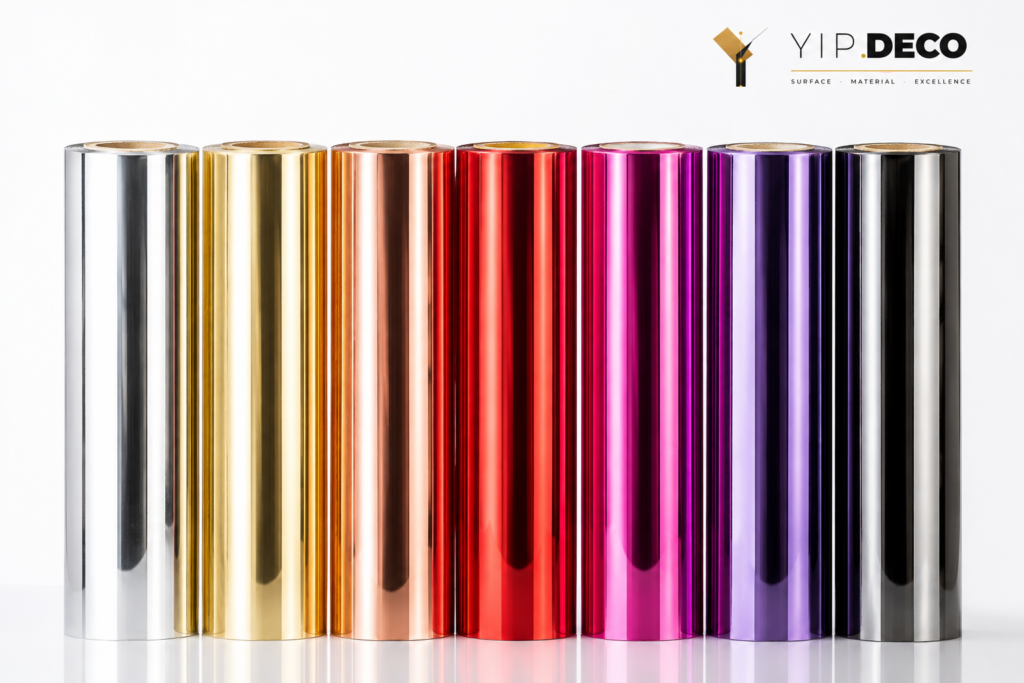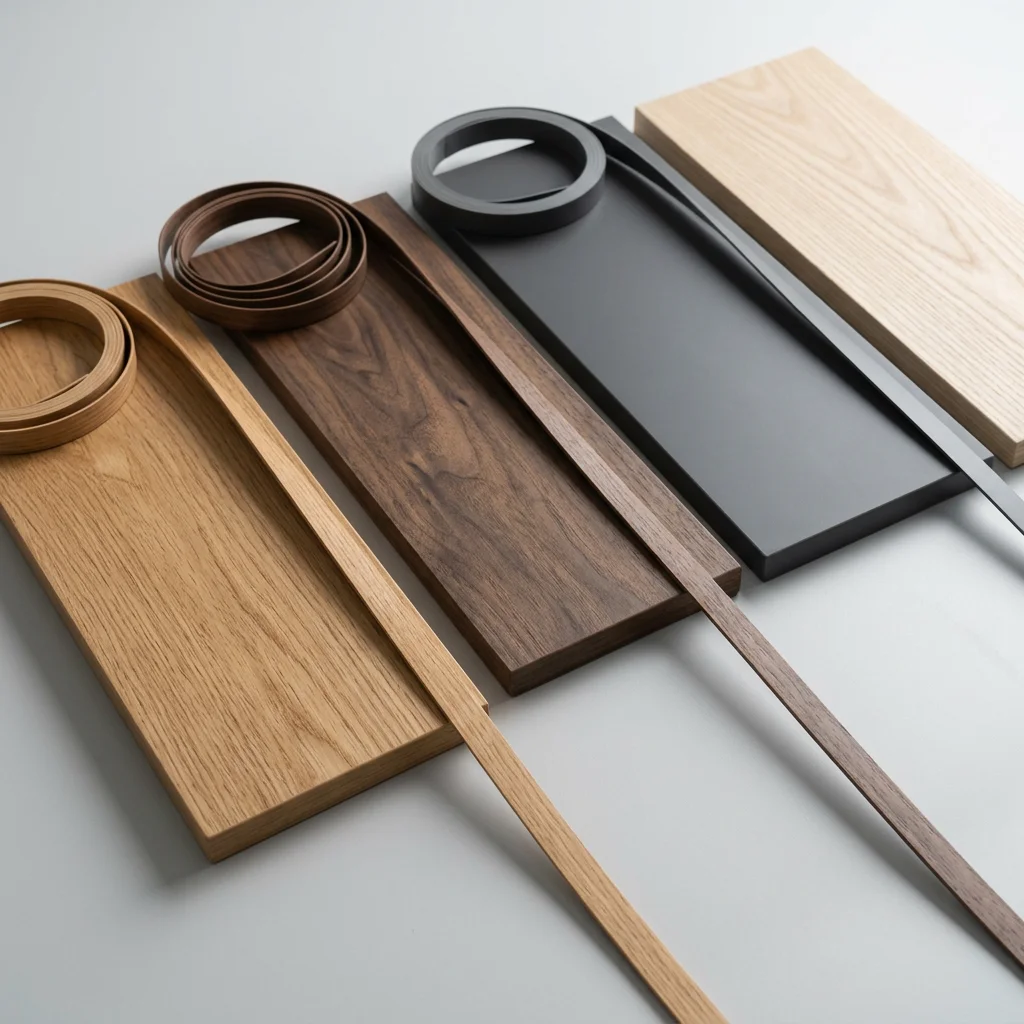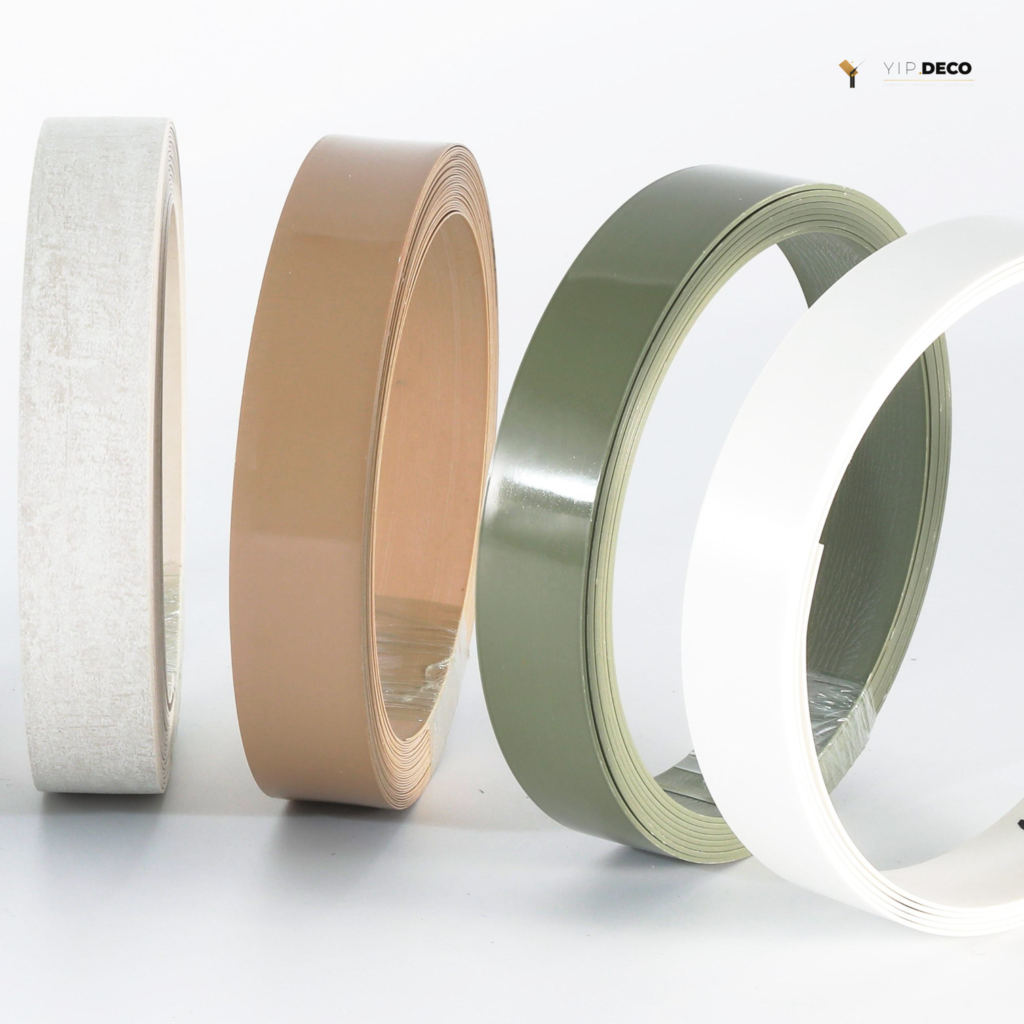
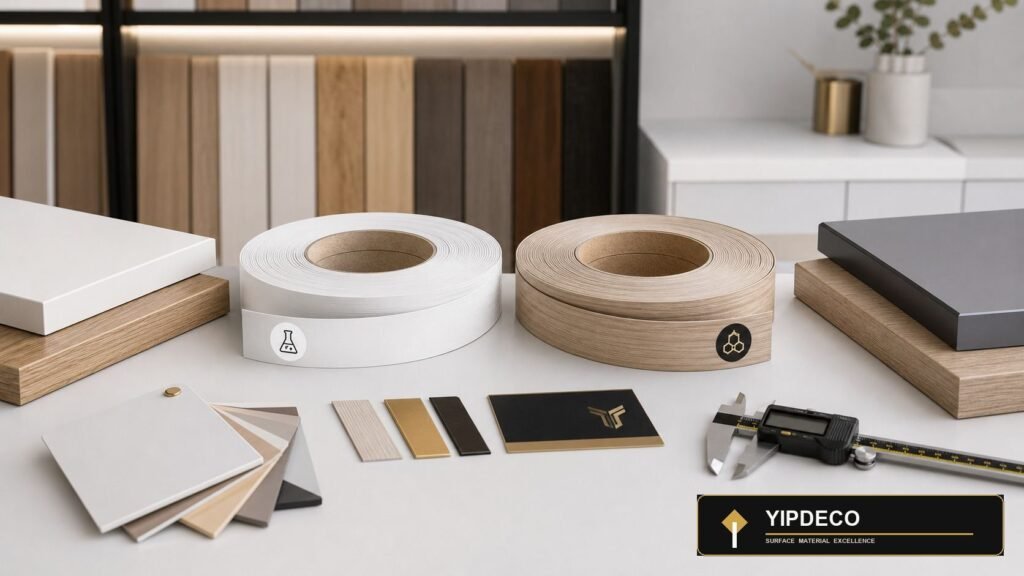
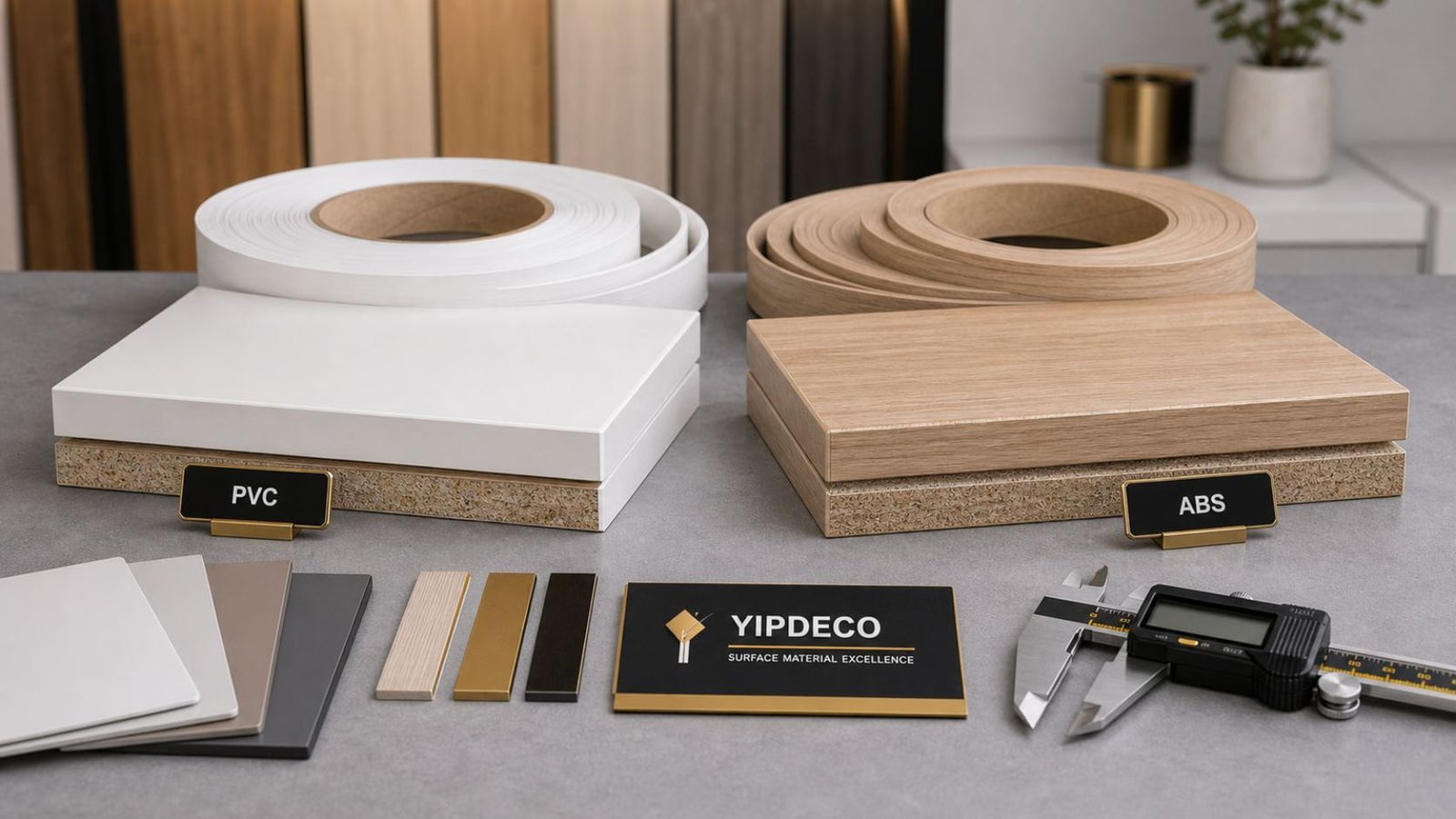
PVC vs ABS edge banding is usually a choice between cost efficiency and market requirements. PVC edge banding is widely used because it is flexible, economical, and easy to process. ABS edge banding is often preferred for export furniture projects that need halogen-free material options, better environmental positioning, and stronger alignment with European or North American buyer expectations.
From our factory and export experience, the best choice is not always the more expensive material. A furniture factory should compare the board type, machine setup, adhesive, trimming quality, customer market, compliance requirements, and final furniture use before deciding between PVC and ABS edge banding.
> YipDeco Insight: In export orders, buyers often ask "PVC or ABS?" but the real question is usually "Which material helps me pass my customer's approval process?" For price-sensitive furniture, PVC may be enough. For Europe-facing or brand-sensitive projects, ABS can make the sourcing conversation easier because it answers environmental and material-positioning concerns earlier.
What Is PVC Edge Banding?
PVC edge banding is made from polyvinyl chloride. It is one of the most common edge banding materials used in furniture, cabinets, wardrobes, office furniture, and commercial interiors.
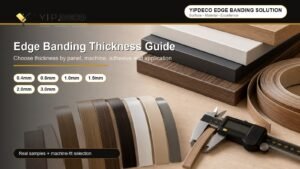
For many manufacturers, PVC is practical because it runs well on standard edge banding machines, offers good flexibility, and supports many colors, woodgrains, matte finishes, and gloss levels. It is also widely available in different thicknesses such as 0.4mm, 0.8mm, 1mm, 1.5mm, 2mm, and 3mm.
PVC edge banding is often selected when the project needs stable quality at a competitive cost. For stock colors, YipDeco can support low MOQ from 100m, which is useful for sample orders, small batches, and mixed-color production.
However, PVC may not be the best fit for every export market. Some buyers, especially in Europe, may ask for halogen-free alternatives or prefer ABS because of internal environmental policies.
What Is ABS Edge Banding?
ABS edge banding is made from acrylonitrile butadiene styrene. It is commonly used in furniture projects where buyers care about environmental positioning, material documentation, and cleaner disposal behavior compared with PVC.
ABS edge banding is halogen-free and is often preferred by European furniture buyers, project suppliers, and brands with stricter material guidelines. It can also provide good impact resistance and stable machining performance when the formulation and backside primer are well controlled.
ABS is usually more expensive than PVC. It may also require more careful control during trimming, scraping, and corner rounding because some ABS formulations can show stress marks if the machine tools are dull or the settings are too aggressive.
For export furniture suppliers, ABS is not just a material upgrade. It can also help answer buyer questions about market preference, compliance direction, and long-term product positioning.
PVC vs ABS Edge Banding: Quick Comparison
| Factor | PVC Edge Banding | ABS Edge Banding |
|---|---|---|
| Main advantage | Cost-effective and widely used | Halogen-free and export-friendly |
| Typical use | Standard cabinets, wardrobes, office furniture, value projects | European furniture, project supply, brand-sensitive export orders |
| Cost level | Usually lower | Usually higher |
| Flexibility | Good, easy to process | Good, but formulation matters |
| Environmental positioning | Common industrial material | Better for buyers requesting halogen-free options |
| Color matching | Strong color and woodgrain options | Strong color and woodgrain options |
| Machine processing | Stable on most edge banders | Stable when tools and settings are suitable |
| Best for | Price-sensitive or general furniture production | Export buyers with stricter material expectations |
Which Material Is Better for Furniture Manufacturers?
For general furniture production, PVC edge banding is often the more practical choice. It is economical, easy to source, and suitable for many cabinet and panel furniture applications.
For export furniture sold into Europe, ABS edge banding may be a better choice because many buyers are familiar with ABS as a halogen-free option. If the customer asks for REACH, RoHS, or other material documentation, ABS can be easier to position in the conversation.
For North American buyers, the decision often depends on the furniture category, price level, and project requirements. Some buyers focus more on board compliance such as CARB P2 or EPA TSCA VI formaldehyde standards, while others also ask about low-VOC materials, surface durability, and long-term stability.
The real answer is: PVC is better for cost-sensitive and general production, while ABS is better when the buyer's market, brand positioning, or documentation requirements make material choice part of the sales decision.
> YipDeco Insight: For many factories, the safest first sample set is not one material only. We usually suggest testing PVC and ABS with the same board, same glue, and same machine setting. The customer can then compare color, glue line, trimming result, and buyer acceptance before locking the bulk material.
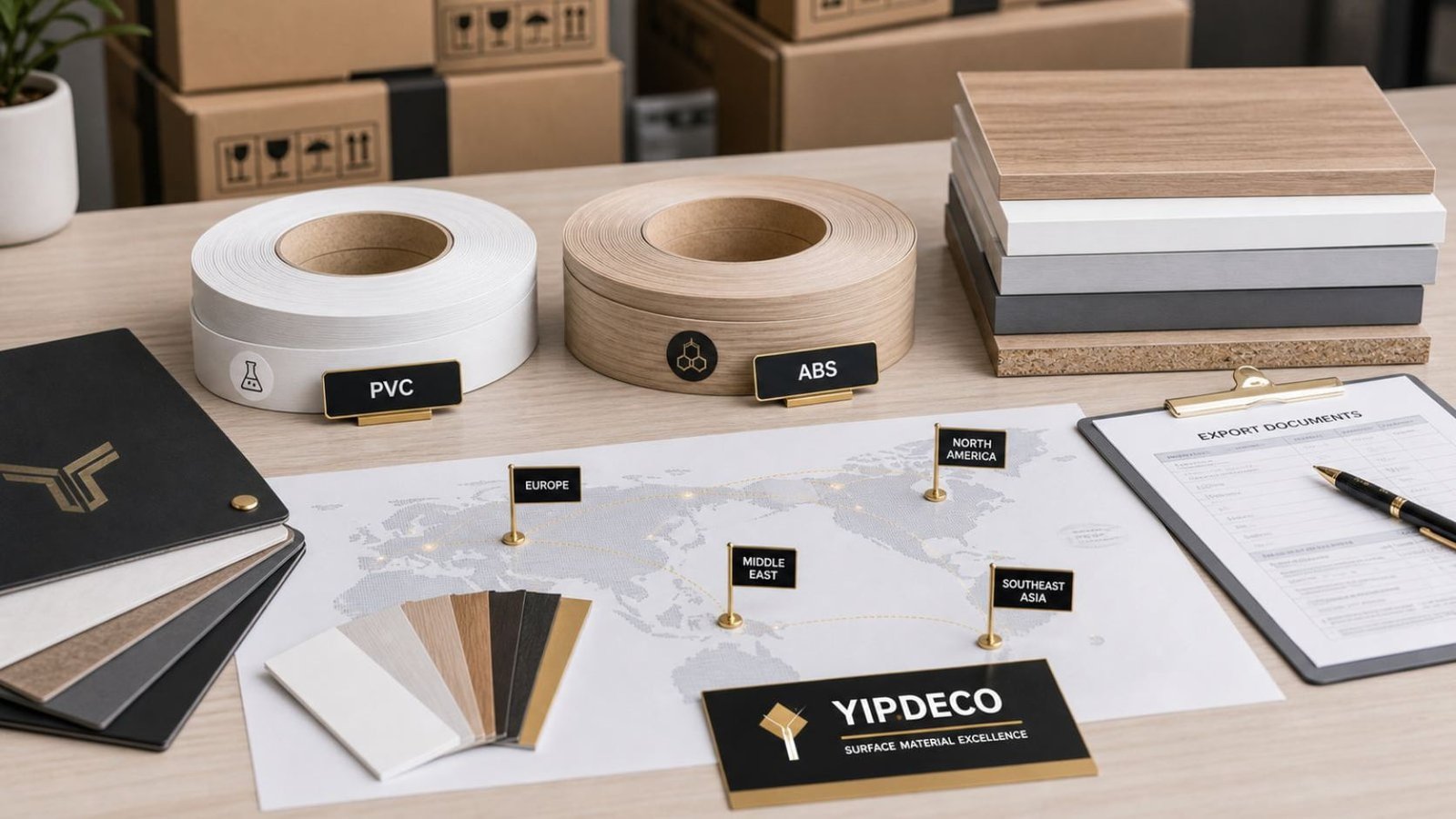
Which Material Fits Different Export Markets?
PVC and ABS edge banding are not only technical choices. They are also market-positioning choices. A buyer selling to price-sensitive local retail may choose differently from a buyer supplying furniture projects in Europe.
| Target market | More common choice | Why buyers choose it | What to confirm before ordering |
|---|---|---|---|
| Europe | ABS, PP, or selected PVC | Halogen-free positioning, REACH/RoHS discussion, stronger environmental expectations | Material declaration, sample approval, gloss and decor match |
| North America | PVC or ABS | Depends on project level, low-VOC expectations, board compliance focus | CARB P2/EPA TSCA VI context, machine test, color consistency |
| Middle East | PVC, ABS, PET options | Project supply, high gloss, woodgrain, marble and decorative surfaces | Surface durability, packaging strength, heat exposure during shipping |
| Southeast Asia | PVC | Cost efficiency, flexible MOQ, practical thickness choices | Price, thickness, color availability, moisture and storage condition |
| Global importers | PVC plus ABS sample option | Need to serve different customer segments | Keep approved samples and repeat-order records |
How Do PVC and ABS Perform on Edge Banding Machines?
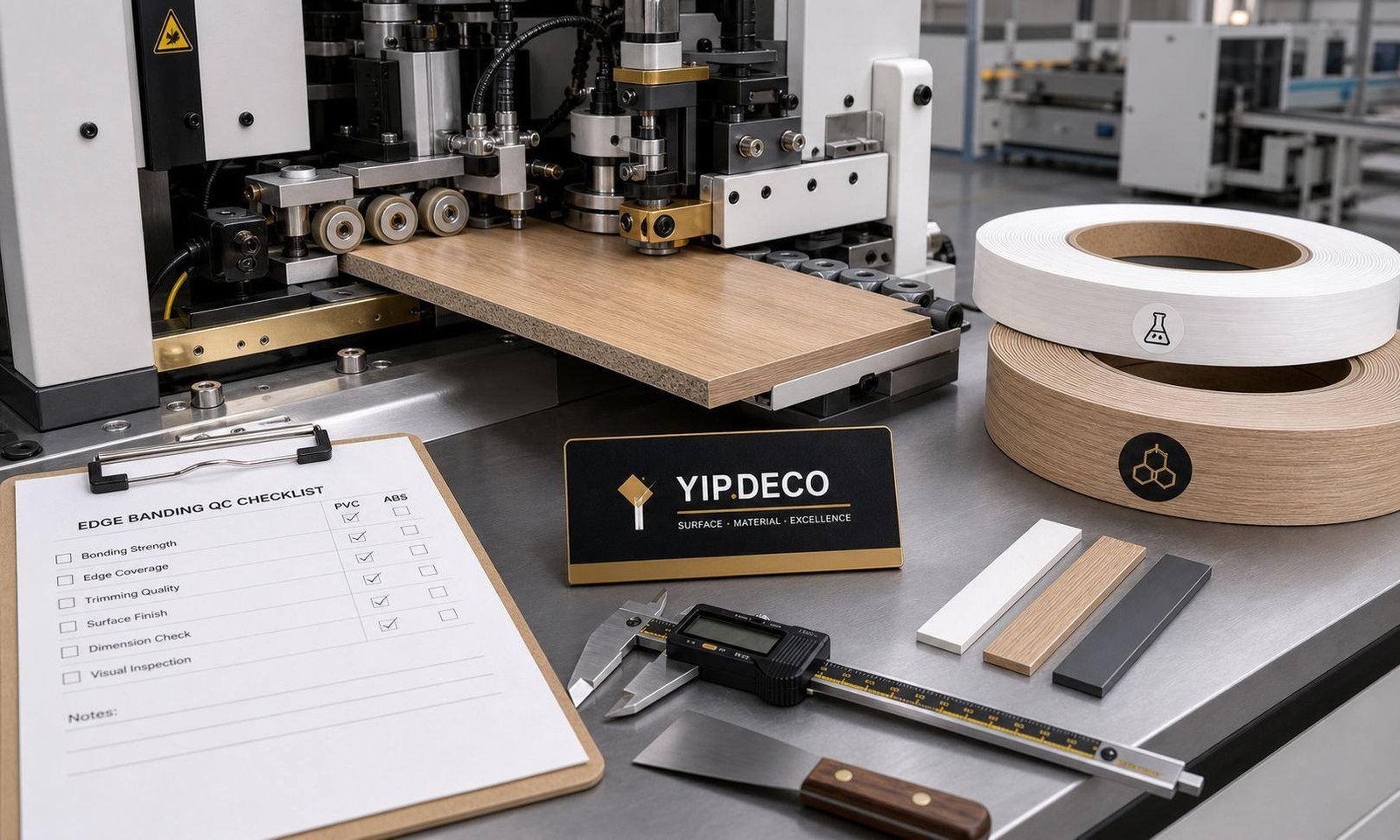
Both PVC and ABS can run well on automatic edge banding machines if the edge banding quality and machine settings are suitable.
For PVC edge banding, factories should pay attention to glue temperature, feed speed, trimming knives, scraper pressure, and polishing units. Good PVC should not crack easily, show heavy white stress lines, or peel after normal machine processing.
For ABS edge banding, tool sharpness is especially important. If trimming knives are worn out or scraper pressure is too high, ABS may show stress marks or rough edges. This does not always mean the material is bad. It may mean the machine needs adjustment.
Before bulk orders, factories should test sample rolls on the real production line. A sample that looks good by hand still needs to pass gluing, pressing, trimming, scraping, buffing, and corner rounding.
| Test point | What to observe | Why it matters |
|---|---|---|
| Glue bonding | Peeling, open joints, uneven glue line | Confirms backside primer, adhesive, temperature, and pressure match |
| Trimming | Chipping, rough edge, white stress line | Shows whether formulation and cutter settings work together |
| Scraping and buffing | Surface scratches, gloss change, edge smoothness | Affects visible finish on cabinets and wardrobes |
| Corner rounding | Cracking, whitening, deformation | Important for thicker 1.5mm, 2mm, and 3mm edge banding |
| Repeat run | Same result after multiple boards | Helps avoid a sample that passes once but fails in production |
How Should Buyers Compare Color Matching?
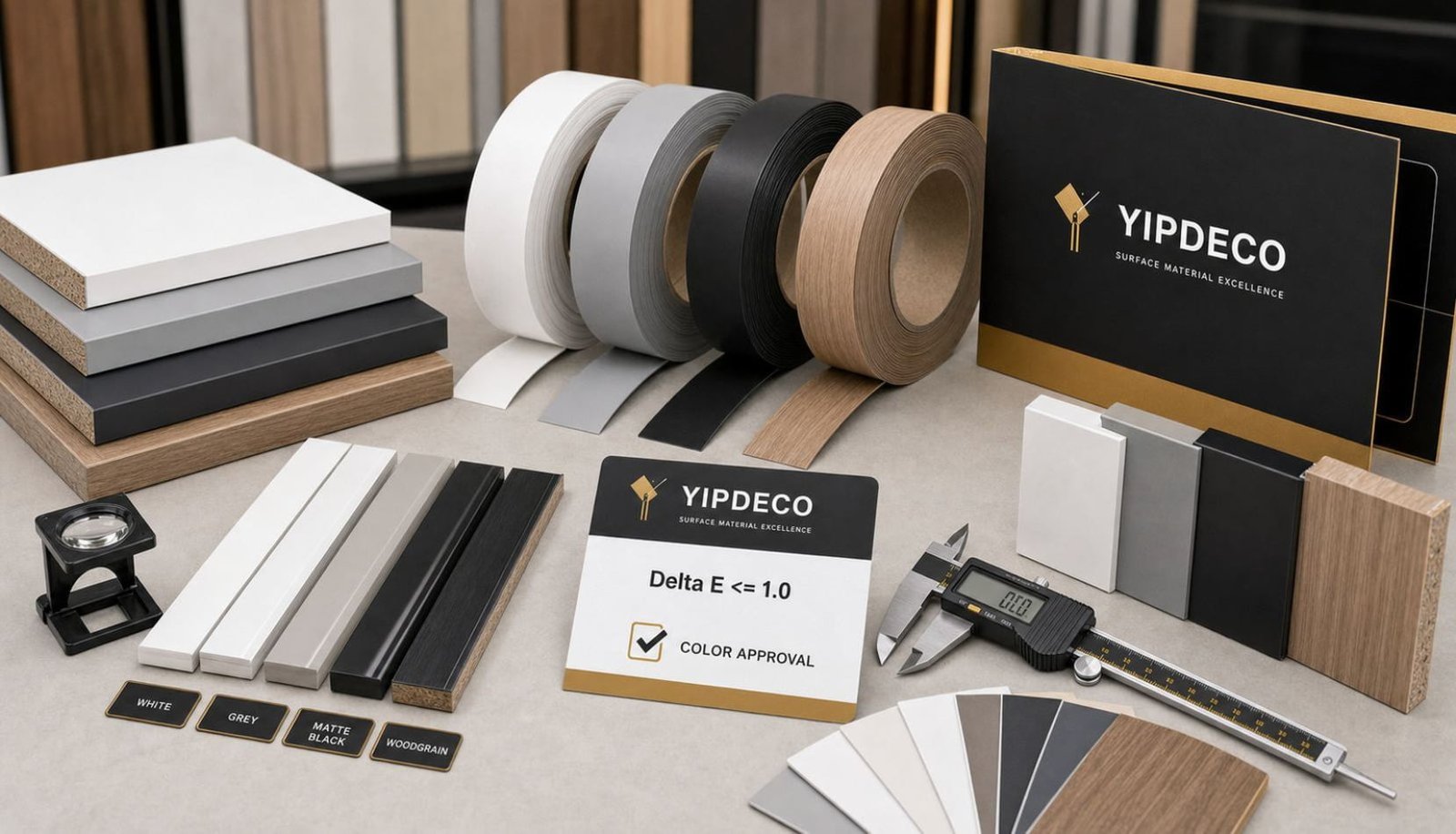
Color matching should be tested with physical samples, not only photos. This is true for both PVC and ABS edge banding.
For solid colors, buyers should check color difference, gloss level, and the visible glue line after edging. For woodgrain edge banding, buyers should also compare texture direction, grain scale, surface finish, and pattern depth.
At YipDeco, color matching is checked against real board samples where possible. For important projects, we recommend approving a sample roll before mass production and keeping the approved sample for repeat orders.
When a tighter match is required, Delta E <= 1.0 can be used as a target reference. Color measurement standards such as ISO/CIE 11664-6 can help buyers understand color-difference communication, but the final decision should still be confirmed with a physical sample under real lighting.
> YipDeco Insight: Photos are useful for communication, but they are not reliable for final color approval. In real orders, lighting, screen display, board finish, and gloss level can all change how a color looks. Physical sample approval is still the most practical way to avoid disputes after shipment.
What About Cost and MOQ?
PVC edge banding usually has a lower unit cost than ABS. This makes it attractive for furniture factories that need stable production volume, competitive pricing, and many color options.
ABS edge banding is usually more expensive because of raw material cost and market positioning. However, if ABS helps a buyer meet a project requirement or win a higher-value export order, the extra cost may be reasonable.
MOQ depends on color, thickness, width, finish, and whether the order is stock color or custom matching. For stock colors, YipDeco can support 100m MOQ. For custom colors, the MOQ should be confirmed based on the development requirement and production plan.
For importers and project buyers, it is better to compare total cost instead of only roll price. Rework, color mismatch, peeling, or poor packaging can cost more than the difference between PVC and ABS.
> YipDeco Insight: A cheaper roll is not always a cheaper project. If a low-price material causes trimming marks, weak bonding, or a visible color mismatch, the factory may spend more on rework than it saved on the roll price.
| Cost item | Low-quality edge banding risk | Better sourcing approach |
|---|---|---|
| Roll price | Looks cheaper on quotation | Compare after machine test and sample approval |
| Production time | Rework from peeling or rough trimming | Confirm machine performance before bulk order |
| Color approval | Customer rejects finished panels | Approve physical samples and keep records |
| Export packaging | Roll damage, carton deformation, wrong sorting | Confirm labels, carton strength, and pallet plan |
| Repeat orders | Color or gloss changes between batches | Keep approved samples and production references |
When Should You Choose PVC Edge Banding?
Choose PVC edge banding when:
- The project is price-sensitive.
- The furniture is for general residential or commercial use.
- The buyer does not require halogen-free material.
- The factory needs many colors with flexible MOQ.
- The machine setup is already stable with PVC.
- The order needs a practical balance between appearance and cost.
PVC is a strong choice for wardrobes, kitchen cabinets, office furniture, retail fixtures, and many standard panel furniture products.
When Should You Choose ABS Edge Banding?
Choose ABS edge banding when:
- The buyer asks for halogen-free material.
- The project targets Europe or a brand-sensitive export market.
- Environmental positioning matters in the sales conversation.
- The customer requests stronger material documentation.
- The furniture has a higher price level or project specification.
- The supplier can provide stable color matching and machine-tested samples.
ABS is often a better fit for export furniture suppliers who need to answer detailed buyer questions, not only offer the lowest price.
Practical Buying Checklist Before Bulk Orders
Before confirming PVC or ABS edge banding, buyers should check:
- Material type: PVC, ABS, PET, PP, acrylic, or other options.
- Thickness and width: match the board and machine requirement.
- Color and gloss: confirm with physical samples.
- Backside primer: check bonding performance with the adhesive.
- Machine test: run sample rolls through the real production line.
- Adhesive type: EVA, PUR, or other systems.
- Packaging: confirm roll protection, labels, cartons, and pallet plan.
- Repeat order control: keep approved samples and production records.
This process helps avoid the most common edge banding problems, including peeling, visible glue lines, color mismatch, rough trimming, and damaged rolls after long-distance shipping.
How YipDeco Helps Buyers Choose Between PVC and ABS
YipDeco supports furniture factories, importers, and project suppliers with PVC edge banding, ABS edge banding, PET decorative materials, surface foil, and panel matching solutions.
For edge banding projects, we can help buyers compare material options, check color matching, prepare samples, suggest packaging for export, and keep order records for repeat supply.
If the buyer is not sure whether PVC or ABS is better, we usually recommend testing both materials with the same board, same adhesive, and same machine settings. This gives a clearer answer than comparing specifications on paper.
Explore Our Range
For buyers comparing PVC vs ABS edge banding, the next step is usually to check matching materials and request samples for real production testing.
| Product range | Best for | Next step |
|---|---|---|
| PVC and ABS Edge Banding | Cabinets, wardrobes, office furniture, project furniture, and export panel furniture | Compare color, thickness, gloss, backside primer, and machine performance |
| Surface Foil | Decorative panel surfaces that need matching woodgrain, solid color, matte, gloss, or texture effects | Match edge banding with board surface, color sample, and finish direction |
| Sample and Project Support | Importers, furniture factories, and project suppliers choosing materials before bulk orders | Send board sample, target market, size requirement, and expected order plan |
Next step: Request matching samples from YipDeco
Final Recommendation
PVC edge banding is usually the best choice when cost, availability, and easy processing are the main priorities. ABS edge banding is usually better when export buyers care about halogen-free material, environmental positioning, and stricter project expectations.
For most furniture manufacturers, the best decision is not simply "PVC or ABS". It is choosing the material that matches the buyer's market, the factory's machine setup, and the final furniture application.
Need help choosing the right material? Send us your board sample, color requirement, thickness, and target market. YipDeco can help prepare PVC and ABS edge banding samples for production testing.
Ready to check your project? Send Your PVC / ABS Edge Banding Inquiry