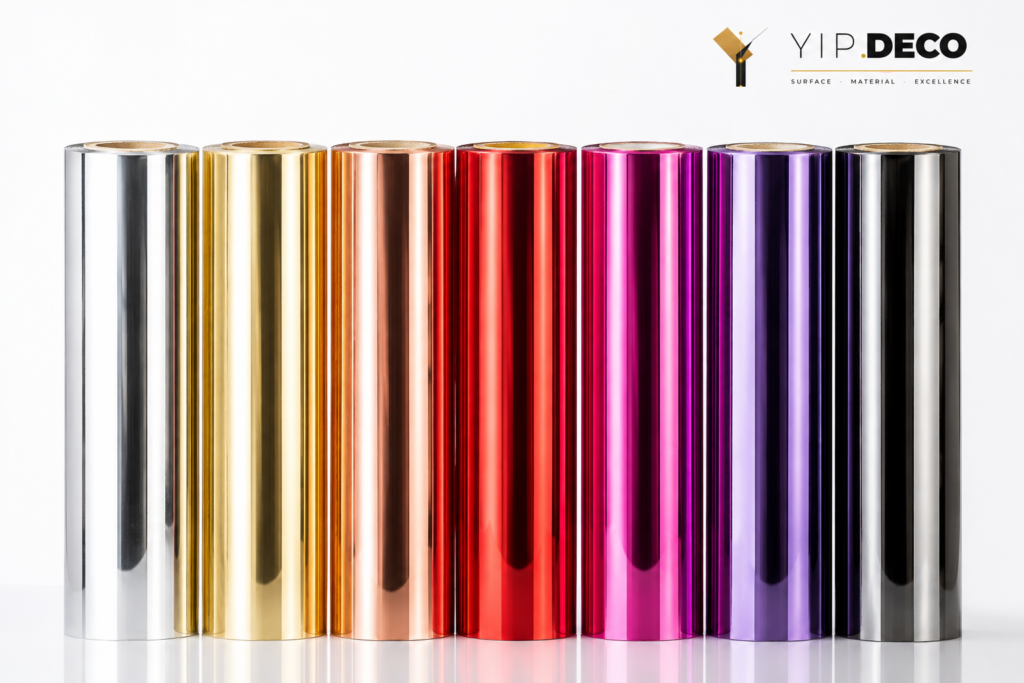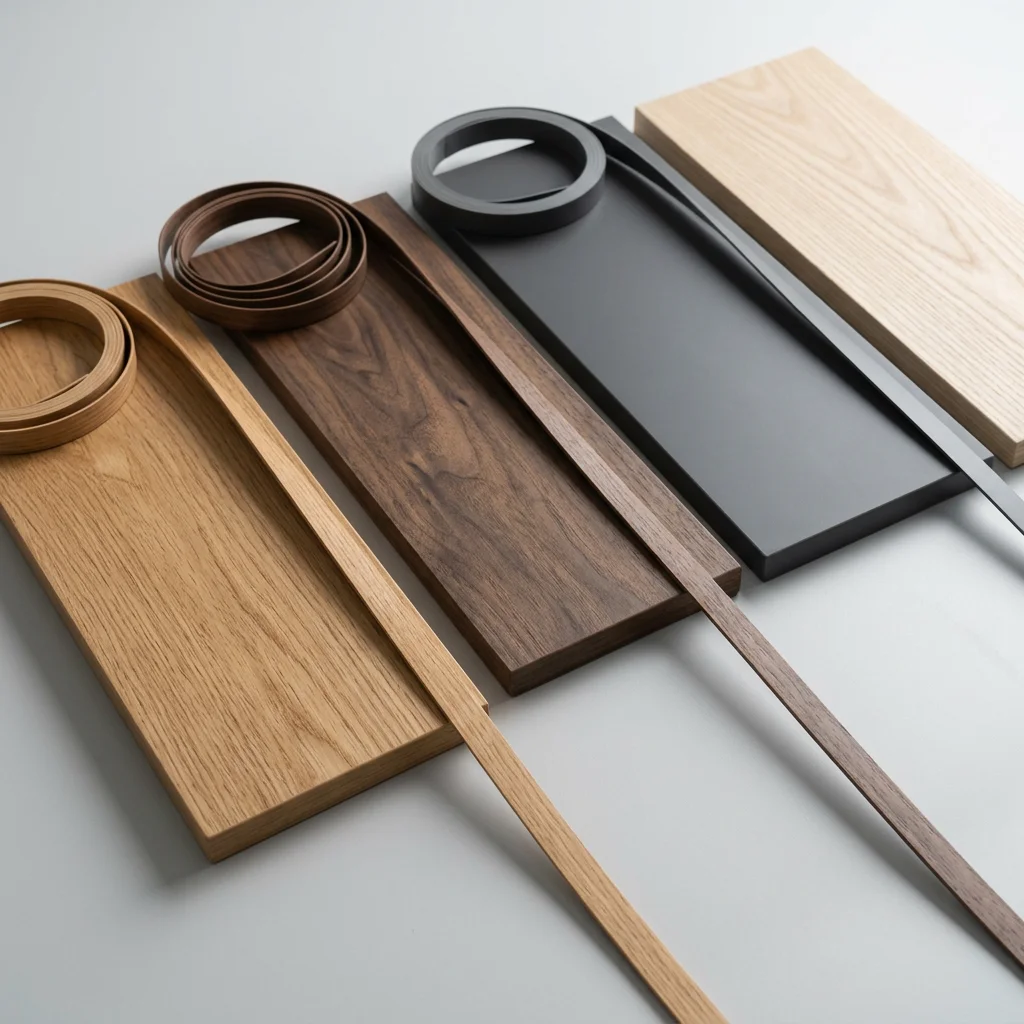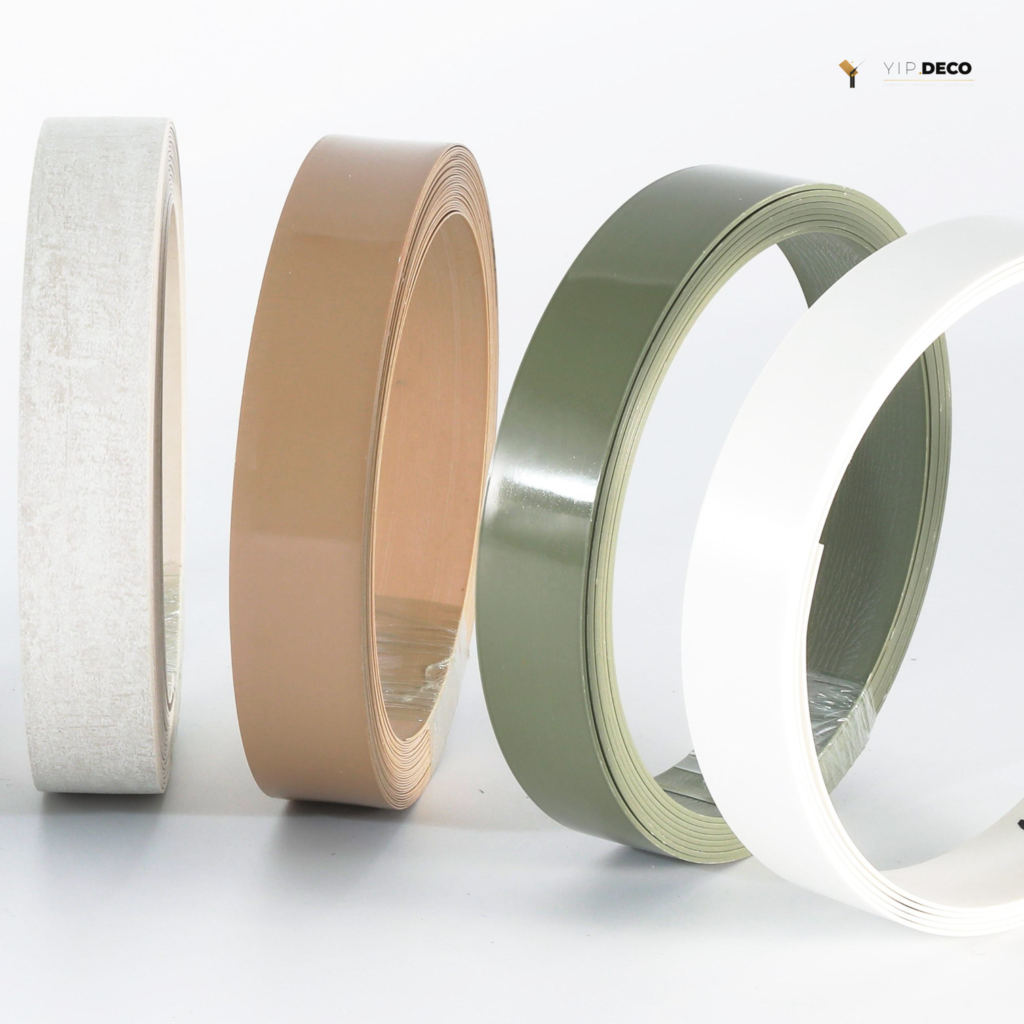
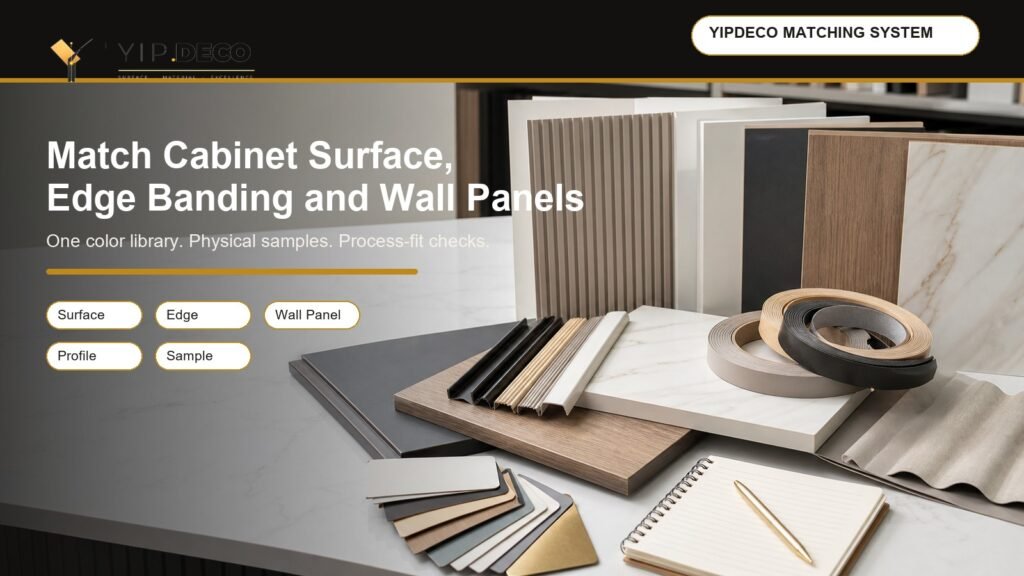
When buyers need to match cabinet surface, edge banding and wall panels, the right process is to check the complete material system, not each item alone. The surface finish, edge color, wall panel texture, substrate, gloss, machine process, sample approval and project environment should be confirmed together before bulk production.
For furniture factories, importers, distributors and interior contractors, this matching step affects the final visual result more than many buyers expect. A surface film can look correct by itself, an edge banding roll can look close in a sample book, and a wall panel can look attractive in a photo. But after production or installation, small differences in color, gloss, texture direction or batch can become visible.
YipDeco works from this practical problem. We support cabinet and wall panel decoration projects with coordinated surface foil, laminated panels, edge banding, wall panels, profiles, trims, samples and machine-parameter guidance. The goal is not only to sell separate materials. The goal is to help buyers build a matched material set that can run in production and remain stable in repeat orders.
> YipDeco Insight: In our customer communication, we usually do not judge matching from photos alone. Photos are useful for the first discussion, but the final decision should come from physical samples checked together: surface, edge, panel, profile and the customer's real application. A cabinet factory, a hotel wall project and a distributor stock order need different matching logic.
Project starting point: Send your matching requirement to YipDeco
Related solution paths: Cabinet Solution | Wall Solution | Surface Foil | Edge Banding
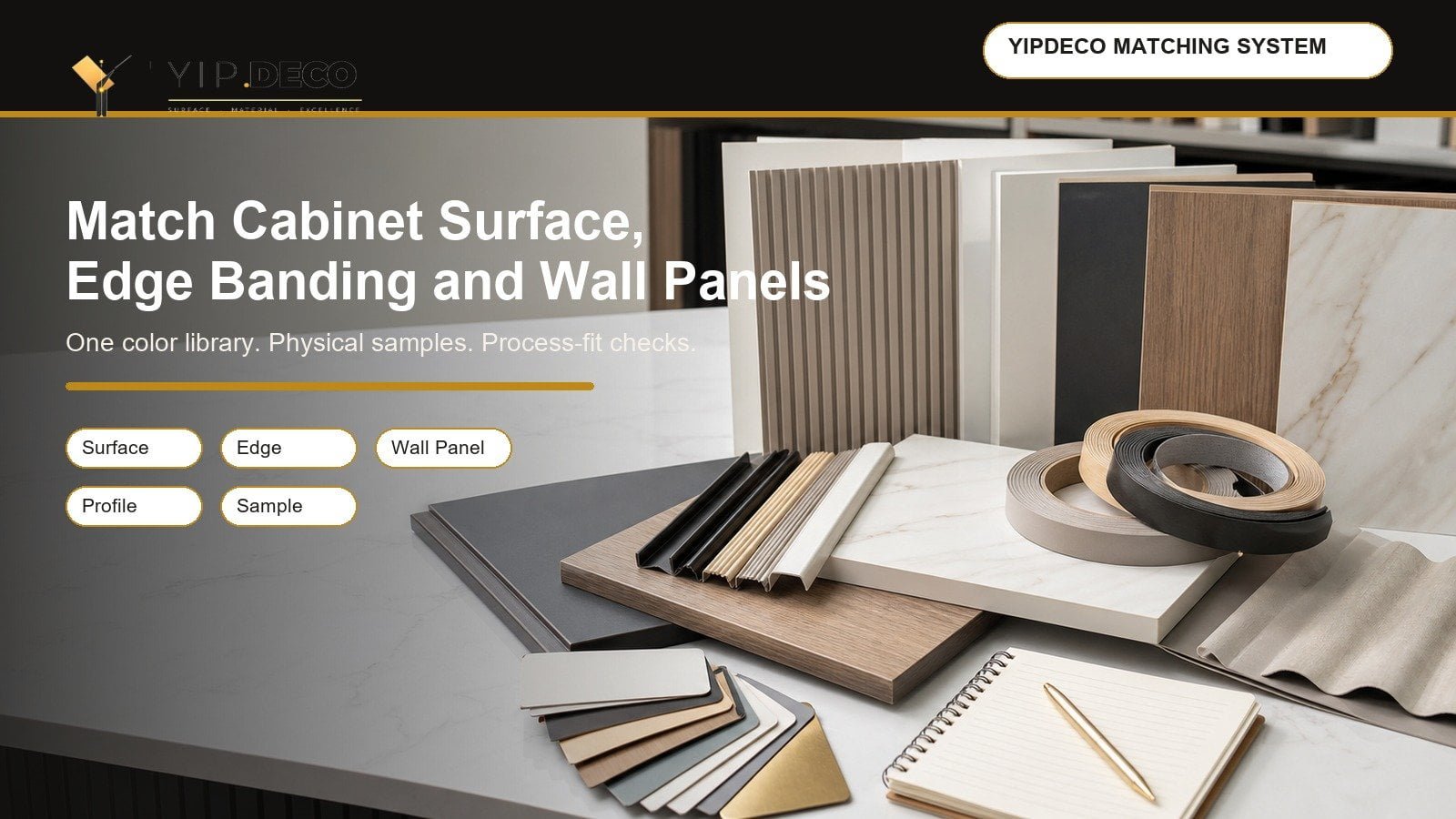
Image quick action: Request matching samples | Cabinet Solution | Wall Solution
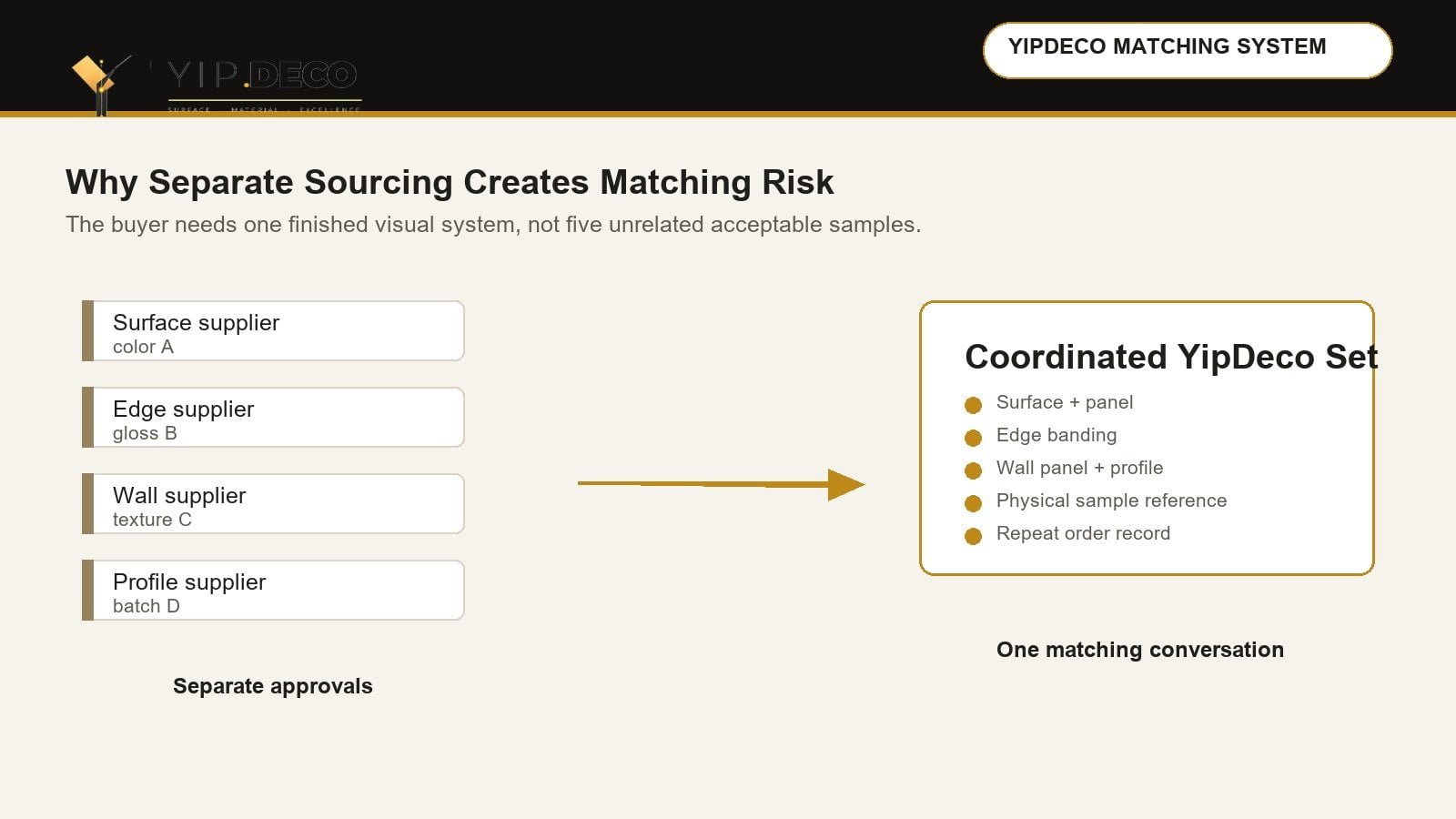
Why Matching Fails When Products Are Checked Separately
Many sourcing problems start because each material is checked in isolation. A buyer approves one surface sample, then later orders edge banding from another supplier, wall panels from another source and trims from a third factory. Each product may be acceptable, but the finished project does not look coordinated.
The most common mismatch points are:
| Matching Area | Common Problem | Why It Happens |
|---|---|---|
| Color tone | Edge looks warmer, greyer or darker than the panel | Different printing systems, substrates or batch references |
| Gloss level | Surface and edge reflect light differently | Matte, semi-matte, high gloss and textured finishes are not aligned |
| Texture direction | Woodgrain or linear texture does not flow naturally | Sample checked without considering installation direction |
| Edge line | Glue line or trimming mark becomes visible | Material thickness, primer, adhesive or machine setting is not suitable |
| Wall-panel set | Panel, profile and trim look like separate items | Accessories were not matched with the main wall panel |
| Repeat order | Second batch is close but not identical | Approved sample and batch reference were not retained |
This is why matching should start earlier than quotation. Before confirming price, buyers should clarify the product type, application environment, surface effect, substrate, machine process, target market and sample approval method.
> YipDeco Insight: From our machinery background, we have seen that many quality disputes are actually matching disputes. The buyer may say the edge banding is wrong, but the real issue can be gloss, panel substrate, trimming pressure or a different light environment. That is why we ask more production questions before we recommend a material.
Need help checking matching risk? Send your surface, edge and wall panel samples to YipDeco
Step 1: Confirm the Application Before Choosing the Material
The first question should not be "which color do you need?" The first question should be "where will this material be used?"
Cabinet doors, wardrobes, wall panels, WPC doors, hotel wall projects and distributor stock programs all have different matching requirements. A color that works for a small cabinet door may not look the same when installed across a large wall. A high-gloss surface may look premium in a showroom but require more careful substrate and process control in production.
For cabinet and wardrobe projects, the buyer should focus on surface and edge consistency, trimming cleanliness, panel flatness, glue-line visibility and repeat-order stability. The edge is close to the surface and can be inspected easily, so small differences can become obvious.
For wall panel projects, the buyer should check a larger installed visual area. Panel size, profile shape, trim color, texture direction, accessory coordination, installation condition and project batch consistency all matter. This is especially important for hotels, retail spaces, apartments and commercial interiors.
For door panels and WPC doors, the surface film must match the substrate, adhesive, lamination temperature, pressure and process speed. Mirror, marble-look, metallic, water ripple, matte and woodgrain effects can all require different handling.
| Application | Matching Priority | Practical Check |
|---|---|---|
| Cabinet doors | Surface and edge visual consistency | Color, gloss, edge thickness, trimming and glue line |
| Wardrobes | Larger visible surface and repeat color | Panel batch, edge match, handle/profile coordination |
| Wall panels | Installed wall system | Wall panel, profile, trim, corner and accessory match |
| WPC doors | Surface film and production process | Substrate, adhesive, pressure, temperature and finish |
| Distributor stock | Sellable color range | Popular colors, sample boards, MOQ and reorder plan |
| Hotel/project supply | Batch and schedule control | Approved sample, project quantity, packing and delivery |
Related wall products: PVC Wall Panels | Mouldings & Grille | SPC Wall Panels | Wall Connection Accessories
Step 2: Match Color, Gloss and Texture Together
Color matching is not only about whether two samples look similar in one photo. Surface materials reflect light differently depending on gloss, texture depth, material thickness and viewing angle. A matte surface and a semi-gloss edge can look mismatched even when the base color is close.
For cabinet projects, buyers should check the panel surface and edge banding under the same light. It is better to test the finished edge after gluing, trimming, scraping and buffing, because machine processing can slightly change the visual edge result.
For wall projects, the buyer should check the main panel together with profiles, trims, corners and connection accessories. If the profile color is close but not exact, the mismatch may be more visible at joints, corners and lighting transitions.
For decorative surface films, the buyer should also confirm texture direction. Woodgrain, linear fabric, water ripple, metallic and stone effects can look different when rotated. If panels, doors and profiles are installed in different directions, the overall project may lose consistency.
YipDeco uses a unified color library to coordinate discussion across surface, panel, edge and profile materials. For important projects, physical sample approval is still the reliable step. Digital communication can shorten the first round, but it should not replace sample confirmation.
> YipDeco Insight: When customers ask us to match a color, we try to understand whether they need a visual match for a cabinet edge, a wall profile, a door panel or a repeat-order reference. The same color name is not enough. We need to know the finish, the light condition, the final product and whether the customer will reorder later.
For color and texture matching: Contact YipDeco for physical samples
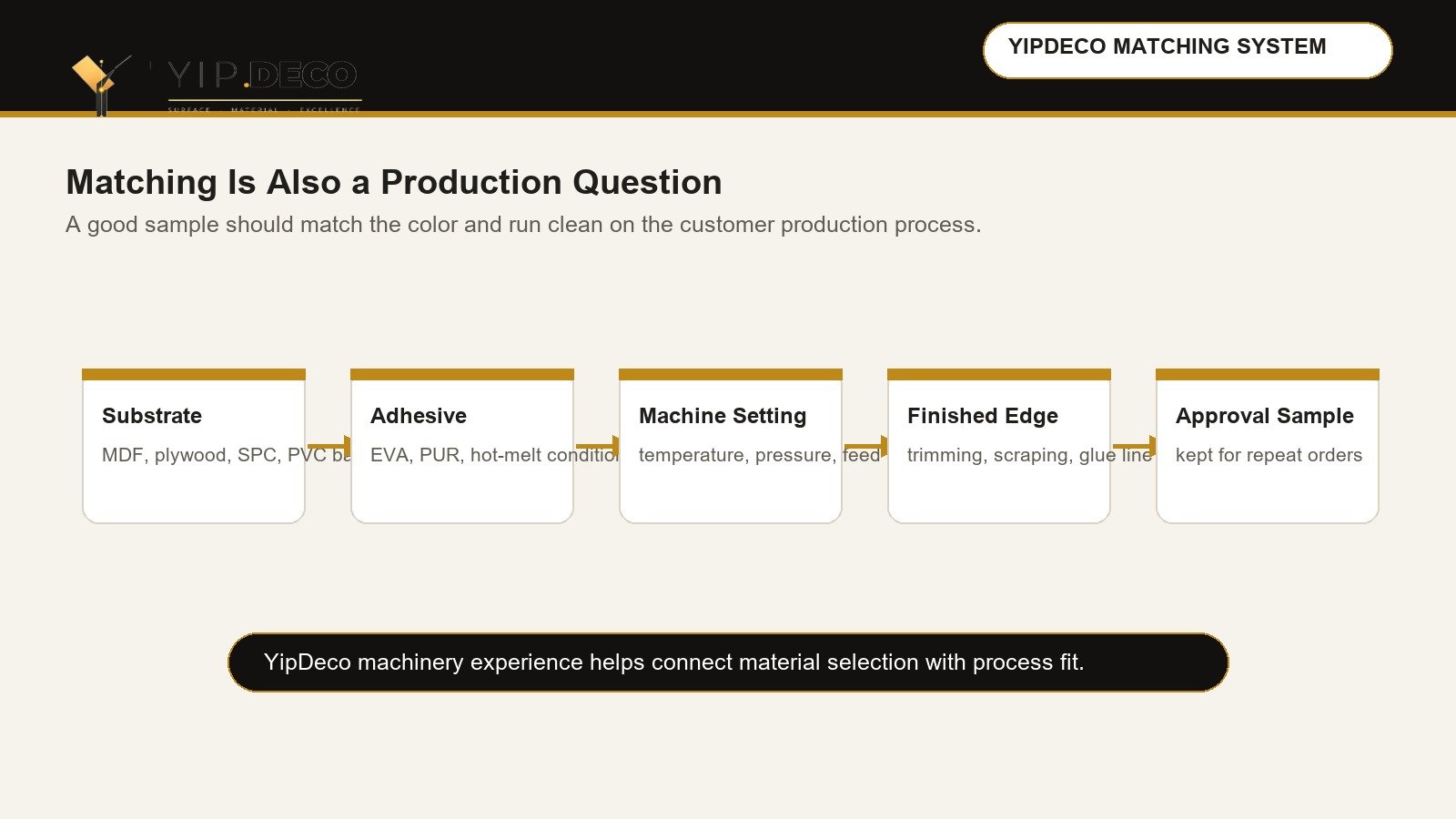
Step 3: Check Substrate and Machine Process
Material matching also depends on the substrate and production process. A surface film can perform differently on MDF, plywood, particleboard, chipboard, SPC, PVC-extruded substrate or other board materials. If the substrate is dusty, uneven, too moist or not prepared correctly, the final surface can show bonding or flatness problems.
Edge banding has the same issue. Even a well-matched color can fail if the panel edge is rough, the adhesive is unsuitable, the pressure is unstable or the trimming tools are worn. The finished edge should be judged after the full process, not before production.
This is where YipDeco's machinery experience becomes useful. Our background in lamination machines, wrapping machines and edge banding equipment helps us ask production questions before material selection:
- What substrate is being used?
- Is the buyer doing flat lamination, profile wrapping, edge banding or hot press?
- What adhesive system is used?
- What temperature, pressure and feed speed are typical?
- Is this for sample approval, trial production or bulk order?
- Does the buyer need machine-parameter guidance?
These questions help prevent a common sourcing mistake: approving a beautiful sample that cannot run cleanly on the customer's real equipment.
| Process Point | Why It Matters | What to Confirm |
|---|---|---|
| Substrate | Affects bonding, flatness and surface appearance | MDF, plywood, chipboard, SPC, PVC substrate or other board |
| Adhesive | Affects bonding strength and glue-line visibility | EVA, PUR, hot-melt conditions or customer process |
| Temperature | Affects film and adhesive behavior | Lamination or edge-banding process window |
| Pressure | Affects contact and final surface | Roller pressure, hot press pressure or edge pressure |
| Feed speed | Affects heating and bonding stability | Trial speed and production speed |
| Trimming/scraping | Affects edge appearance | Tool sharpness, scraper setting and buffing result |
> YipDeco Insight: We usually treat sample matching as both a color question and a process question. If the customer can tell us their machine type, substrate and adhesive, our recommendation becomes much more accurate. This is one of the differences from a supplier who only sends a catalog.
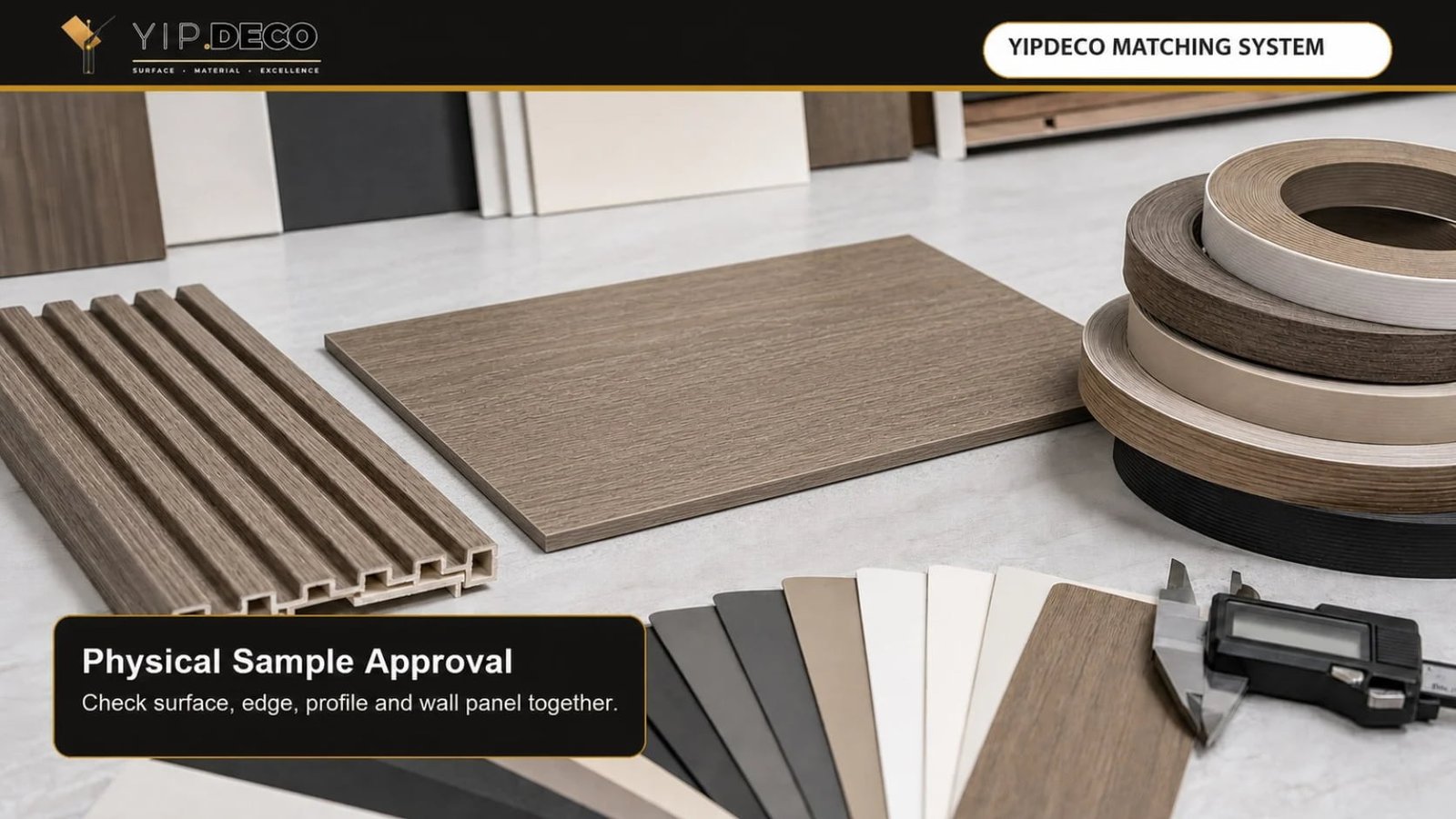
Step 4: Build a Physical Sample Approval System
A physical sample approval system helps reduce misunderstanding before bulk production. It also gives the buyer and supplier a shared reference for repeat orders.
For a cabinet project, the sample set should include the surface material, edge banding, matched panel if available and a processed edge sample. The buyer should check it under normal use lighting, not only under showroom light.
For a wall panel project, the sample set should include the main wall panel, profile, trim, corner solution or accessory where needed. If the project will use several rooms or floors, batch consistency should be discussed early.
For distributor stock, the sample set should help the distributor sell. This may include a color card, sample board, popular color range, edge banding roll reference and wall panel sample pieces.
For custom matching, both sides should keep the approved sample. Photos can be recorded, but the physical sample is the final reference.
| Sample Type | Best For | What to Keep |
|---|---|---|
| Color-card sample | Early color selection | Color code, finish name and target application |
| Physical material sample | Real surface checking | Surface, edge, profile or panel sample |
| Processed panel sample | Cabinet factory approval | Finished edge, trimming result and glue-line check |
| Wall project sample kit | Contractor or project buyer | Panel, profile, trim and accessory combination |
| Retained approval sample | Repeat orders | Signed or confirmed sample reference |
Sample request: Send YipDeco your board, edge, wall panel or color reference
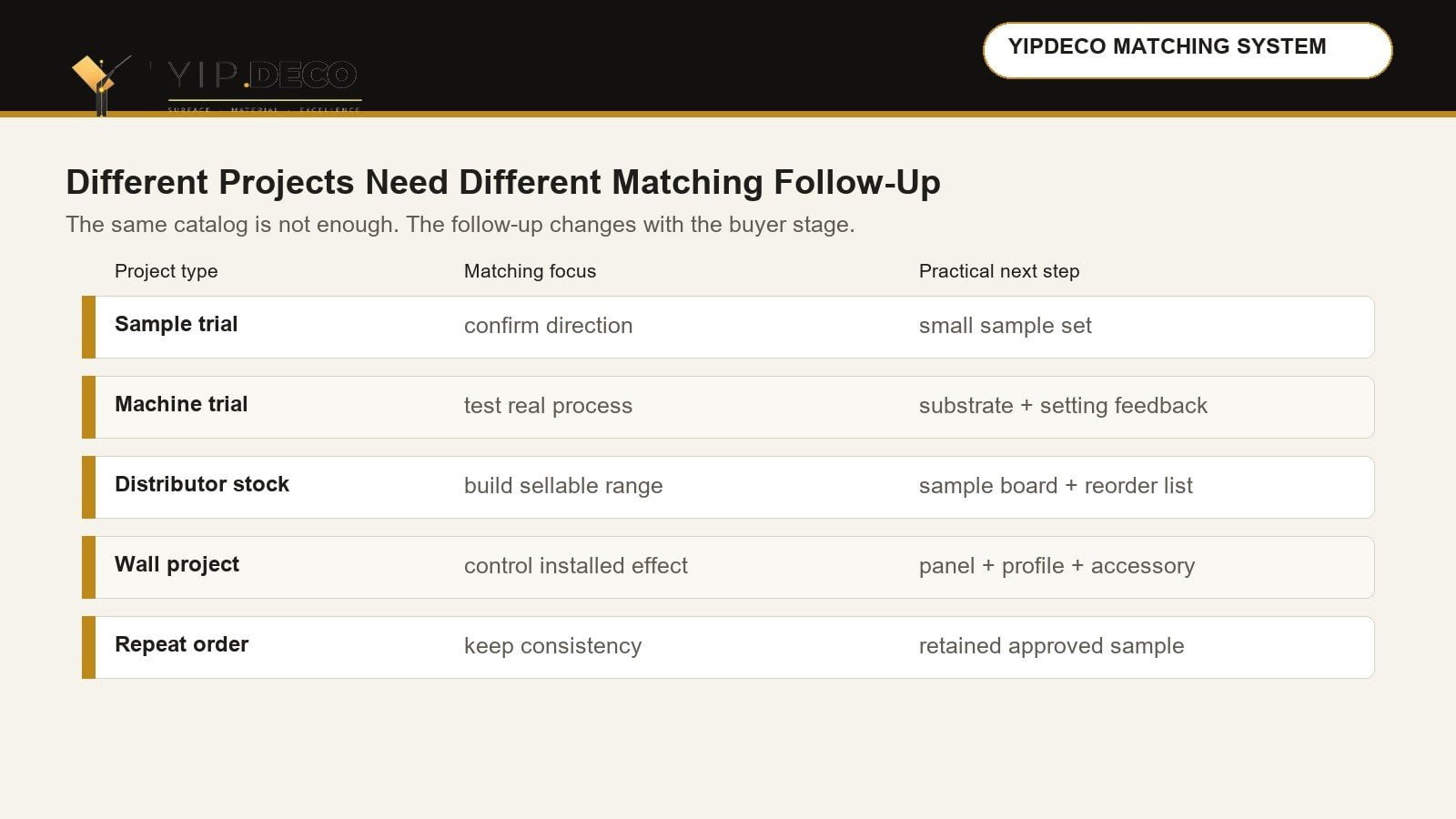
Step 5: Match the Project Follow-Up Method
Different customer stages need different follow-up. This is important because a buyer who is still exploring options should not be handled the same way as a project buyer who needs shipment planning.
For a sample trial, the focus is to confirm direction. YipDeco should help the customer identify whether surface foil, edge banding, wall panels, profiles or a matched set is most relevant.
For a small batch order, the focus is MOQ, available colors, packing, lead time and whether the customer can test market response without overstocking.
For distributor stock, the focus is range building. The customer needs a sellable product structure: popular colors, catalogs, samples, reorder logic and practical MOQ.
For hotel or project supply, the focus is batch consistency, packaging protection, delivery schedule, installation coordination and documentation.
For cabinet factory repeat orders, the focus is stability. The buyer needs repeatable color, consistent edge performance, retained samples and production feedback.
> YipDeco Insight: In customer development, one useful question is: "Are you choosing a material direction, preparing samples for your customer, testing production, or planning a project order?" Once we know the stage, we can send the right information instead of overwhelming the buyer with every catalog.
| Buyer Stage | What the Buyer Needs | YipDeco Follow-Up |
|---|---|---|
| Early selection | Direction and product range | Recommend relevant material categories |
| Sample preparation | Physical confirmation | Prepare sample set and matching notes |
| Machine trial | Production fit | Ask for machine, substrate and process feedback |
| Small batch | Practical purchase | Confirm MOQ, packing and lead time |
| Distributor stock | Sellable range | Build catalog logic and sample board |
| Project order | Risk control | Confirm batch, packaging, schedule and documents |
Explore Our Range
Matching cabinet surface, edge banding and wall panels is easier when the buyer starts from a coordinated material system instead of separate supplier lists.
| YipDeco Range | Best For | What to Check |
|---|---|---|
| Cabinet Solution | Cabinet doors, wardrobes, furniture panels and matched cabinet projects | Surface effect, panel substrate, edge banding, gloss and sample approval |
| Surface Foil | Cabinet, wall, door panel and decorative board surface effects | PET/PVC direction, finish, texture, adhesive and lamination process |
| Edge Banding | Cabinets, wardrobes, panels, worktops and furniture edges | Color, gloss, thickness, primer, machine performance and MOQ |
| Wall Solution | Interior wall projects, commercial walls and distributor wall ranges | Wall panel, profile, trim, accessory, installation and project batch |
| Panel Matching Support | Buyers needing coordinated surface, panel, profile and edge materials | Physical sample, color reference, production process and repeat-order plan |
Fast inquiry links: Request matching samples | Check Cabinet Solution | Check Wall Solution
Market Requirements Can Change the Matching Decision
Target market affects material selection and documentation. A buyer selling to Europe may care more about chemical documentation, ABS/PP options, low-emission positioning and decor-code matching. A North American buyer may ask about composite wood compliance and low-VOC context. Middle East buyers may focus more on high-gloss, mirror, marble-look, project-scale visual impact and stable supply. Southeast Asian buyers may prioritize practical MOQ, cost control and fast stock availability.
For North America, buyers may reference composite wood rules. The U.S. EPA explains formaldehyde emission standards for composite wood products and finished goods containing them. For Europe, the European Commission describes REACH as the main regulation for chemical risk management. For wood-related documentation, FSC chain-of-custody certification may be relevant when the buyer needs certified material tracking.
These external requirements should not be added as decoration in a quotation. They should be checked according to the buyer's target market, material type and order requirement.
Buying Checklist Before Requesting Matching Samples
Before asking for a quotation or sample set, buyers can prepare the following information:
| Information | Why It Helps |
|---|---|
| Product type | Cabinet, wardrobe, wall panel, door panel, decorative board or distributor stock |
| Application environment | Indoor cabinet, commercial wall, hotel project, kitchen, bathroom or general furniture |
| Surface effect | Woodgrain, marble, solid color, matte, high gloss, mirror, metallic or textured |
| Substrate | MDF, plywood, particleboard, chipboard, SPC, PVC substrate or other board |
| Matching scope | Surface only, edge only, wall panel only or full system matching |
| Process | Flat lamination, profile wrapping, edge banding, hot press or project installation |
| Target market | Europe, North America, Middle East, Southeast Asia or general export |
| Sample goal | Color selection, machine trial, customer presentation or project approval |
| Order stage | Trial sample, small batch, stock range, repeat order or project order |
This information helps YipDeco recommend the right direction faster. It also helps the buyer compare suppliers by matching ability, not only by unit price.
Final Recommendation
To match cabinet surface, edge banding and wall panels, buyers should check the complete material system: application, surface effect, color, gloss, texture, substrate, adhesive, machine process, sample approval, packaging and repeat-order control.
The best match is not created by one nice sample photo. It is created by a practical process: understand the project, prepare physical samples, test the material on the real substrate or machine where needed, keep the approved reference and plan repeat orders carefully.
YipDeco supports this process with cabinet and wall panel decoration materials, surface foil, edge banding, wall panels, profiles, trims, sample matching and machine-parameter guidance. If you are preparing a cabinet, wall panel, door panel or interior decoration project, send your material requirement and target application. We can help prepare a matching sample direction.
Ready to match your surface, edge and wall panel materials? Contact YipDeco for sample support
External References
- U.S. EPA: Formaldehyde Emission Standards for Composite Wood Products
- European Commission: REACH Regulation
- FSC: Chain of Custody Certification