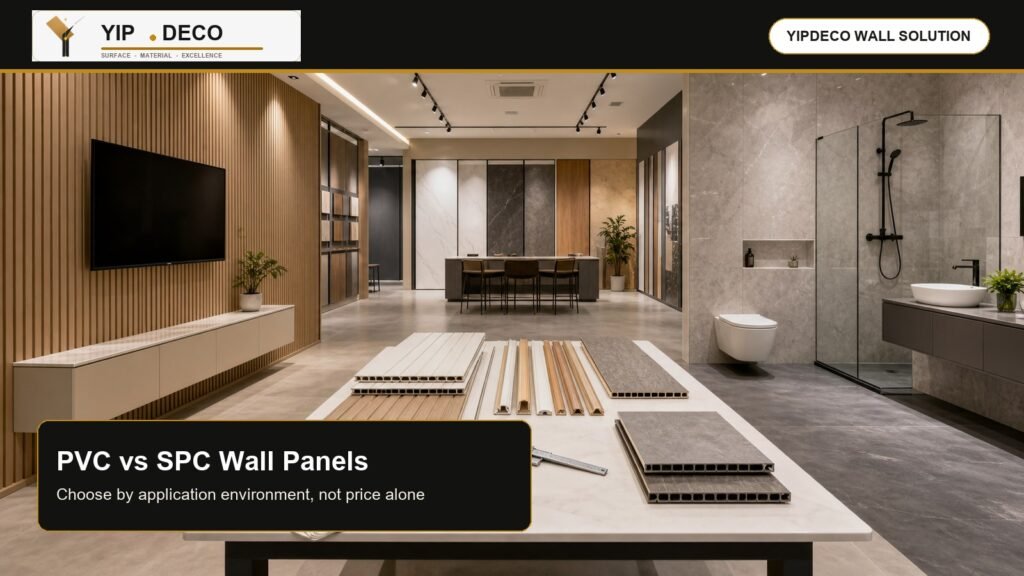
PVC Wall Panels vs SPC Wall Panels: Which Is Better for Commercial Interiors?
When a project buyer asks whether PVC wall panels or SPC wall panels are better, the safest answer is not "SPC is better" or "PVC is cheaper." The real answer is: choose by the installation environment.
For dry commercial interiors, PVC wall panels are often practical, lightweight and cost-efficient. For wet areas, high-humidity zones, tile-replacement projects, or spaces with heavier traffic and impact risk, SPC wall panels may be the safer specification. The wrong choice can lead to warping, edge lifting, open joints, rework, rejected samples, or a material that looks acceptable in a showroom but fails in the actual project.
This article explains the decision from a sourcing and project-risk point of view, especially for importers, distributors, fit-out contractors and commercial interior buyers who need to confirm material before bulk production.
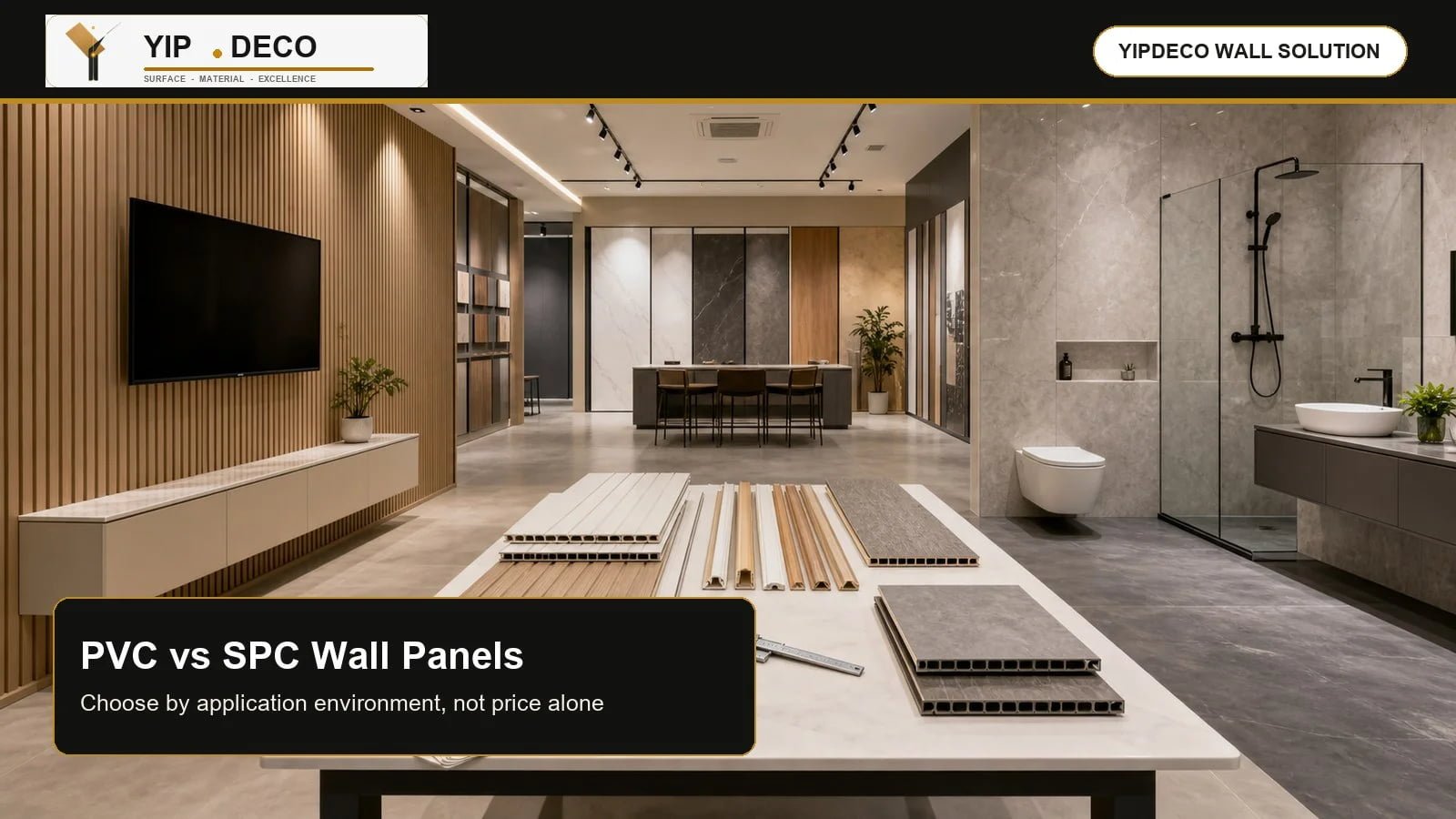
Direct Answer: Use the Scene First, Then Compare the Material
If the project is a dry feature wall, office reception wall, retail display wall, hotel room backdrop or standard commercial renovation, PVC wall panels may be the better balance of appearance, weight, installation speed and budget.
If the project is a bathroom, shower room, wet room, humid corridor, restaurant back area, healthcare space, or a wall surface expected to replace ceramic tile, SPC wall panels deserve stronger consideration because the core is more suitable for moisture-heavy environments.
The decision should start with these questions:
| Project Condition | Better Starting Point | Why |
|---|---|---|
| Dry decorative commercial wall | PVC wall panel | Lightweight, flexible design, cost-efficient |
| Bathroom or shower wall | SPC wall panel | Better fit for moisture-heavy wall use |
| Tile-replacement wall project | SPC wall panel | More stable in wet or semi-wet scenes |
| Fast office or retail renovation | PVC wall panel | Easier handling and broad decorative choices |
| Corridor with impact and cleaning pressure | SPC wall panel | More rigid and stable under heavier use |
| Color-led decorative feature wall | PVC or SPC | Choose by moisture, then confirm color system |
The point is not to rank one material above the other. The point is to prevent wrong specification.
Choose by Project Scene
If you are already sourcing for a real project, these pages can help you move from material comparison to product selection:
| Project Need | Useful Link |
|---|---|
| Full wall panel system planning | Wall Solution |
| Dry decorative wall panels | PVC Wall Panels |
| Corners, joints and finishing details | Wall Connection Accessories |
| Fluted, grille and profile-style walls | Mouldings & Grille |
| Sample matching and quotation | Contact YipDeco |
What Buyers Often Misunderstand About SPC Wall Panels
One misunderstanding we see in inquiries is that buyers use SPC flooring logic when asking for SPC wall panels. They may ask for thickness, backing or installation details based on flooring specifications, then assume the same material can be ordered and installed vertically on a wall.
That is risky.
SPC wall panels and SPC flooring should not be treated as the same product category. Flooring products are designed for foot traffic, floor locking systems and horizontal installation. Wall panels need to consider weight, wall adhesion, trim connection, vertical fixing, corner treatment and how the finished surface meets ceilings, skirting, doors, cabinets and accessories.
YipDeco Insight
In real buyer communication, the dangerous mistake is not asking for SPC. The dangerous mistake is asking for SPC with the wrong application logic. When the project is a wall project, we first need to confirm where the panel will be installed, whether the wall is dry or wet, how it will be fixed, and which trims or profiles are needed. A flooring specification copied into a wall-panel order can create problems even before the container is loaded.
Where PVC Wall Panels Work Well
PVC wall panels remain a strong option for many commercial interiors. They should not be described as outdated or inferior. In the right scene, PVC can be the most practical material.
PVC wall panels are commonly considered for:
- Office reception walls and meeting-room feature walls
- Retail display walls
- Hotel room decorative backgrounds
- Apartment renovation walls
- Dry corridors and public areas with moderate use
- Projects needing woodgrain, marble, matte, glossy or fluted decorative effects
The main advantages are practical:
| PVC Wall Panel Strength | Why It Matters to Buyers |
|---|---|
| Lower material cost | Helps distributors and contractors control project budget |
| Lighter weight | Easier handling, packaging and installation |
| Broad decorative range | Useful for woodgrain, stone, matte and color-series designs |
| Fast renovation use | Suitable for dry interior upgrades and repeat supply |
| Flexible profile options | Works with mouldings, grille panels and accessories |
PVC is especially suitable when the wall is decorative, dry, and not exposed to direct water or heavy humidity for long periods.
Where SPC Wall Panels Are Usually Safer
SPC wall panels are more relevant when the wall environment is stricter. For example, if the buyer wants a wall material that can replace ceramic tile in a bathroom or commercial washroom, the material must deal with moisture, cleaning and dimensional stability.
SPC wall panels are worth considering for:
- Bathrooms and shower rooms
- Hotel washrooms
- Wet rooms and humid commercial areas
- Restaurant or cafe service zones near water
- Healthcare or public spaces with stronger cleaning needs
- Tile-replacement renovation projects
- High-traffic corridors where a more rigid wall surface is preferred
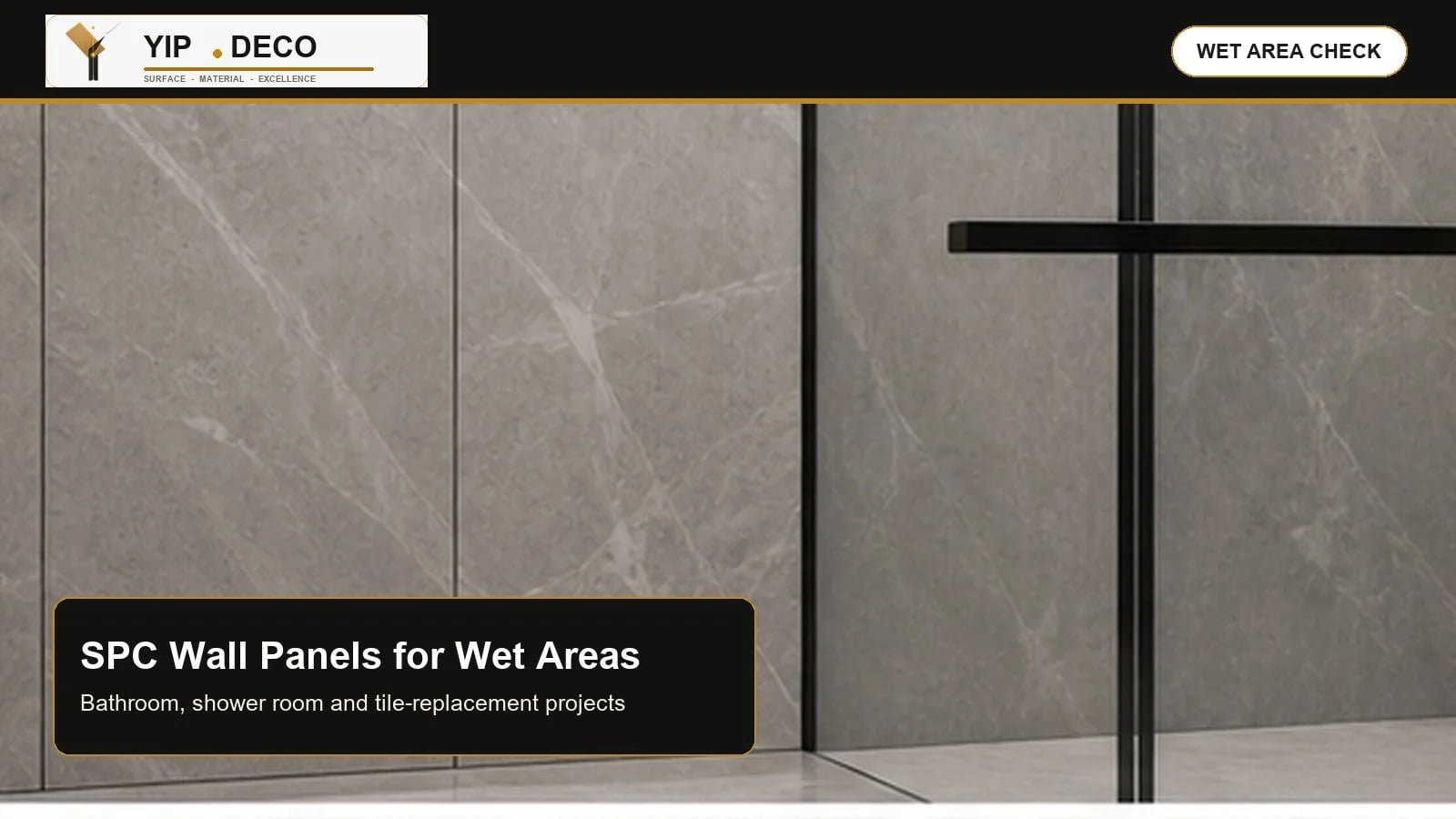
The buyer still needs to confirm the exact product construction, installation method and supplier documents. SPC is not a magic word. But when the application environment involves moisture, SPC is usually a more logical starting point than PVC.
YipDeco Insight
For bathroom, shower-room and tile-replacement inquiries, we should not guide buyers only by price. A lower-cost panel that is not suitable for the humidity level may create a much higher cost later. If PVC is used in a wet scene where it is not designed to perform, the common risks are edge lifting, warping, joint opening or rework after installation. That is why the first question should be about the wall environment, not the quotation.
The Real Cost of Choosing the Wrong Material
The biggest cost is not the panel price. It is project failure.
Here are the real problems that can happen when the material is chosen only by price or by a simple "PVC vs SPC" table:
| Wrong Decision | Possible Result | How to Prevent It |
|---|---|---|
| PVC selected for a high-humidity wall | Edge lifting, warping, joint cracking or rework | Confirm moisture, steam and water exposure before ordering |
| SPC flooring spec copied into wall panel order | Wrong thickness, weight, backing or fixing method | Ask for SPC wall-panel specifications, not flooring specs |
| Material chosen without trim plan | Poor corners, unfinished edges, weak installation detail | Check mouldings, connectors and wall accessories together |
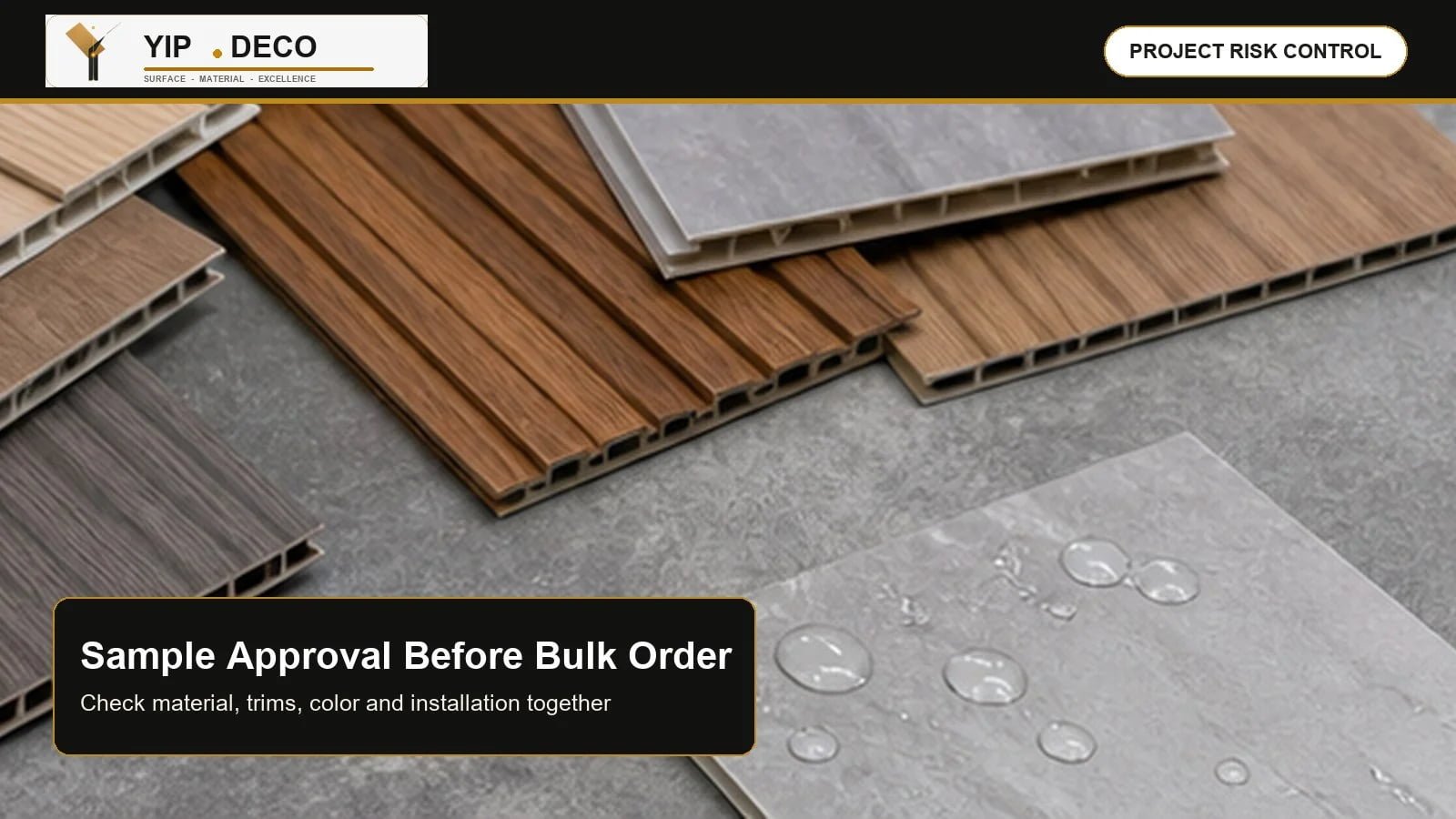
| Color sample approved alone | Mismatch with cabinets, edge banding or profiles | Approve physical samples as a system |
| Buyer checks only panel price | Higher cost after replacement or client rejection | Compare total project risk, not only unit price |
For project buyers, the correct comparison is not only material cost. It is material cost plus installation risk, after-sales risk, sample risk, color risk and repeat-order risk.
Dry Area vs Wet Area: A Practical Selection Framework
Use this framework before requesting samples or quotation.
Choose PVC Wall Panels First When:
- The wall is inside a dry commercial space.
- The panel is mainly decorative, not exposed to direct water.
- The project needs many color, woodgrain or marble options.
- The buyer wants a lighter, easier-to-handle product.
- The budget is sensitive and the environment is not demanding.
- The wall is for visual upgrade, not tile replacement.
Typical examples include office walls, hotel bedroom walls, dry retail feature walls and showroom backgrounds.
Choose SPC Wall Panels First When:
- The wall may face high humidity, steam or regular cleaning.
- The project is a bathroom, shower room or wet-area renovation.
- The buyer wants to replace ceramic tile with a faster wall system.
- The space has high traffic or stronger impact risk.
- The client requires a more rigid wall-panel structure.
- Rework after installation would be expensive or difficult.
Typical examples include hotel bathrooms, apartment bathrooms, washrooms, wet commercial corridors and some healthcare or hospitality projects.
Do Not Ignore Color Coordination
Many buyers think material performance is the only issue. In real commercial projects, color coordination can create its own risk.
For a wall panel, intentional color contrast can be acceptable. A designer may choose a darker fluted panel beside a lighter marble-look wall, or combine a woodgrain wall panel with a neutral cabinet color. In this case, contrast is part of the design.
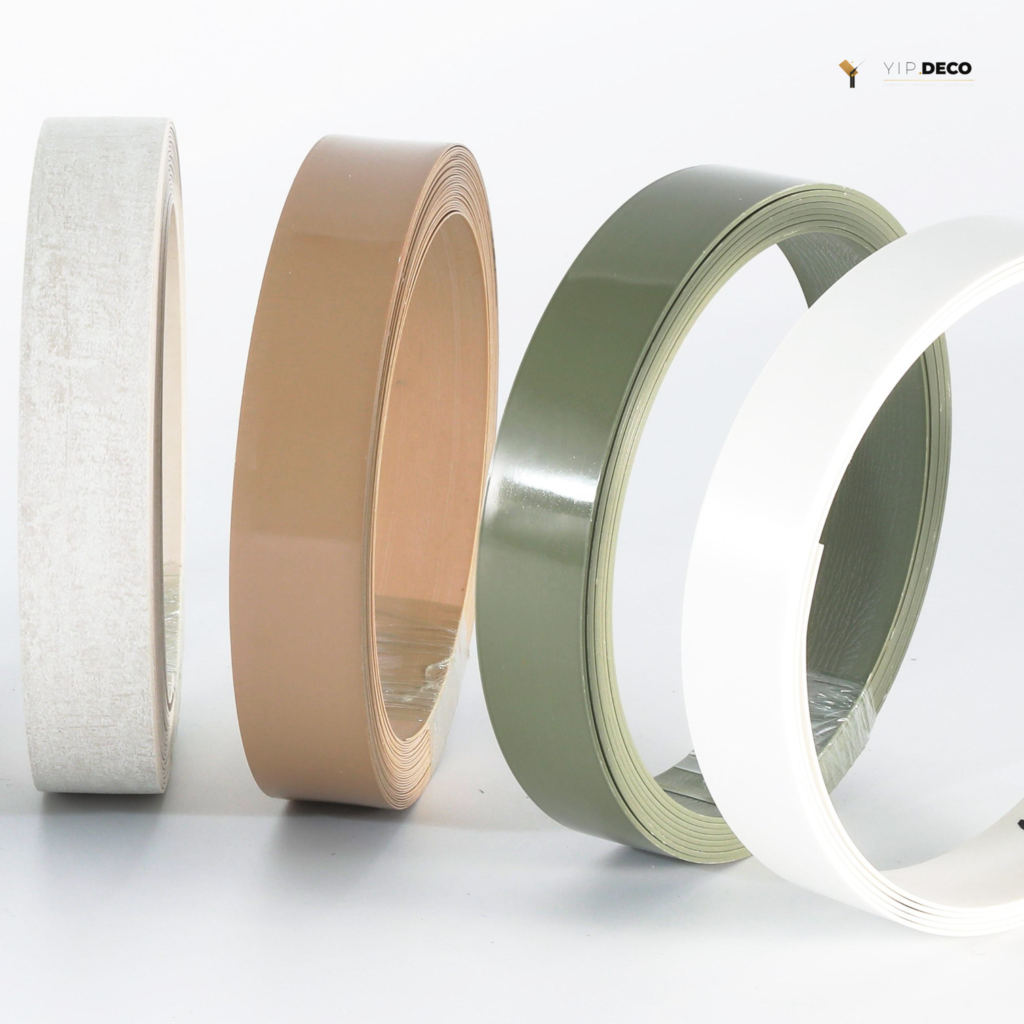
But if the wall panel must match cabinet surfaces, edge banding, door panels, trims or profiles, color deviation becomes a procurement problem. A small mismatch can lead to client rejection, especially when different suppliers provide different parts of the same interior system.
YipDeco Insight
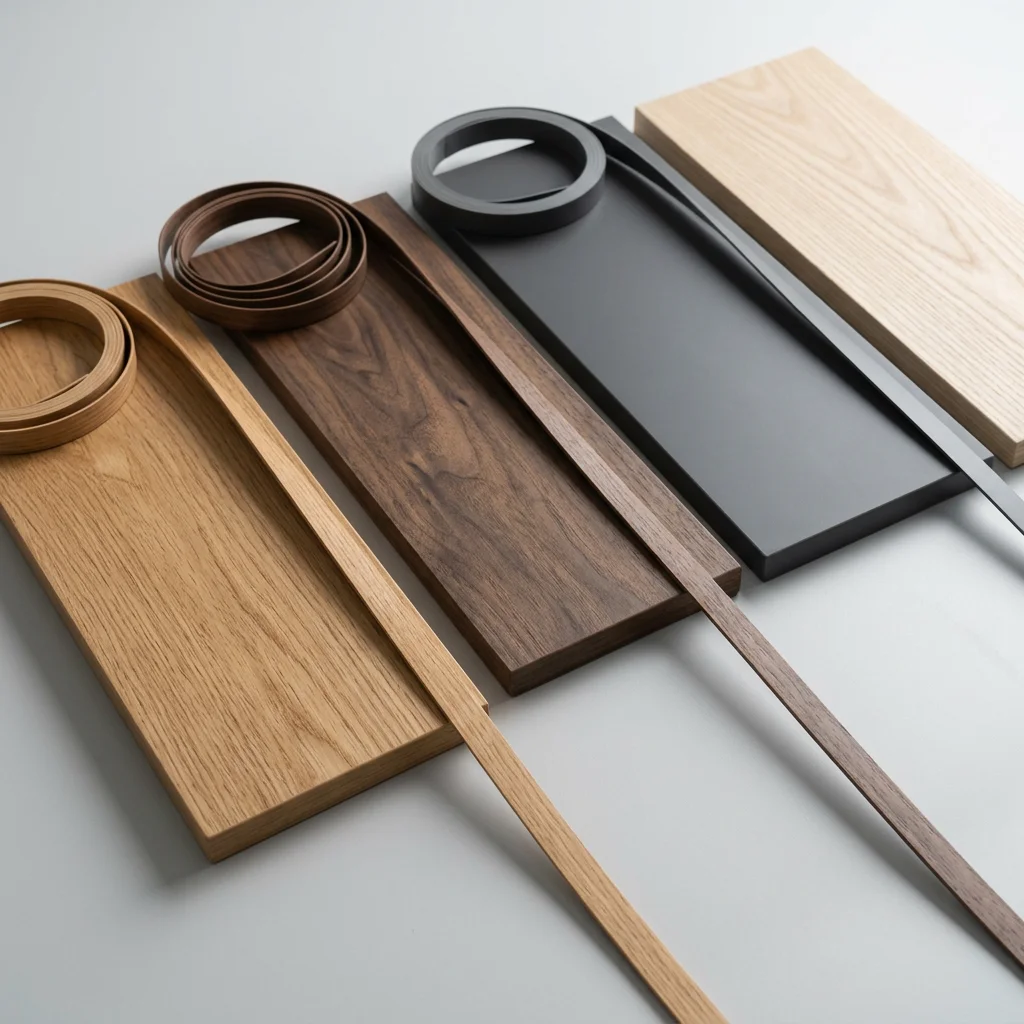
For wall panels, contrast can be beautiful. For cabinet panels and matching edge banding, color difference can become a return problem. That is why we usually treat wall panels, surface finishes, edge banding and profiles as a coordinated project system when the buyer needs matching. The material choice is one part. The color library and physical sample confirmation are another part.
What to Ask Before Ordering PVC or SPC Wall Panels
Before confirming bulk production, send the supplier a project-based checklist instead of only asking for a price list.
1. Installation Environment
Ask:
- Is the wall dry, semi-wet or wet?
- Is there direct water, steam or frequent cleaning?
- Is the wall in a bathroom, shower room, kitchen area, corridor or public space?
- Is the panel replacing ceramic tile?
This is the first filter between PVC and SPC.
2. Wall Surface and Fixing Method
Ask:
- What substrate will the panel be installed on?
- Is the wall flat enough?
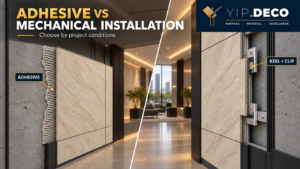
- Will the system use adhesive, clips, profiles or other fixing accessories?
- Are there corners, ceiling joints, skirting lines or door edges?
A good panel can still fail if the installation method is not matched to the wall condition.
3. Panel Thickness, Weight and Backing
Ask:
- Is this specification designed for wall use?
- What thickness and structure are recommended for the project?
- Is the backing suitable for the intended fixing method?
- Is the product being confused with flooring material?
This is especially important for SPC.
4. Color, Gloss and Texture Matching
Ask:
- Does the buyer need exact matching or intentional contrast?
- Will the wall panel coordinate with cabinets, edge banding, surface foil or profiles?
- Can physical samples be checked under project lighting?
- Will repeat orders follow the same color reference?
For matching projects, approve real samples, not only digital photos.
5. Accessories and Finishing Parts
Ask:
- Which trims, mouldings or connection accessories are needed?
- How are inside corners, outside corners and panel joints finished?
- Are grille panels or decorative profiles part of the same wall system?
- Can the supplier provide matching or compatible accessories?
Many wall-panel complaints come from incomplete finishing details, not from the flat panel itself.
Internal Product Direction for Buyers
If you are planning a wall-panel project, start from the wall system, then move into material and color selection:
- For the full wall category, see Wall Solution.
- For dry decorative projects, review PVC Wall Panels.
- For corners, trims and finishing details, check Wall Connection Accessories.
- For decorative profiles and grille-style systems, see Mouldings & Grille.
- For coordinated cabinet or door-surface color systems, review Surface Foil.
When the wall panel must coordinate with cabinets, edge banding or surface finishes, use one shared sample approval process before bulk order.
Contact YipDeco for wall panel sample matching
Simple Buyer Decision Table
| Buyer Question | If Yes | Material Direction |
|---|---|---|
| Is this a bathroom, shower room or wet wall? | Yes | Start with SPC wall panel |
| Is the panel replacing ceramic tile? | Yes | Start with SPC wall panel |
| Is it a dry decorative feature wall? | Yes | PVC may be suitable |
| Is the project very budget-sensitive? | Yes | PVC may be suitable if the area is dry |
| Is heavy cleaning or high traffic expected? | Yes | Consider SPC |
| Is exact color matching required with cabinets or trims? | Yes | Confirm samples and color system first |
| Is the buyer using SPC flooring specs? | Yes | Stop and request wall-panel specs |
Final Recommendation
PVC wall panels and SPC wall panels should not compete as "cheap vs premium." They should be selected by project scene.
Choose PVC wall panels when the environment is dry, decorative, budget-sensitive and installation speed matters.
Choose SPC wall panels when the environment is humid, wet, high-traffic, or when the project needs a tile-replacement wall material for bathrooms, shower rooms or similar areas.
For serious B2B procurement, the safest workflow is:
- Confirm the wall environment.
- Confirm whether the area is dry, humid or wet.
- Confirm whether the panel is decorative or replacing tile.
- Confirm wall-panel specifications, not flooring specifications.
- Confirm trims, accessories and installation method.
- Confirm physical color samples before bulk production.
That is how buyers reduce project risk before the order is placed.