Before a wall panel buyer places a trial order or bulk order, the sample kit should do more than confirm whether a color looks attractive. It should help the buyer filter real project risk: surface performance, batch consistency, accessory matching, installation details, documentation, and supplier reliability.
In our daily sample communication with overseas buyers, one pattern appears repeatedly. Many buyers ask for "a wall panel sample," receive one or two panel pieces, check the color under office lighting, and then move forward too quickly. That process feels efficient, but it leaves too many questions unanswered.
A proper wall panel sample kit is not a color approval ritual. It is a risk-filtering system before bulk production.
If you are comparing suppliers for wall solution materials, especially PVC wall panels, SPC wall panels, grille panels, trims, and accessories, this guide explains what to request and how to evaluate it before you commit to volume.
Why a Wall Panel Sample Kit Matters Before Bulk Order
For importers, distributors, contractors, and hospitality project buyers, a bulk wall panel order is rarely just a material purchase. It is a commitment to a finish direction, installation system, and customer promise.
If the sample stage is weak, the bulk order risk is already being built into the project.
The most common problems are not complicated:
- The buyer only checks color, but does not test scratch resistance, water resistance, heat tolerance, or surface cleaning.
- The sample is a display piece, not representative of mass production.
- The buyer checks panels but forgets trims, connectors, corner profiles, or edge banding.
- The sample looks correct in an office, but shifts under project lighting.
- The buyer does not clarify MOQ, packing, lead time, or compliance documents before approving the material.
These issues are avoidable if the sample kit is requested and evaluated as a complete system.
What Should Be Included in a Wall Panel Sample Kit?
A useful sample kit should match the decision the buyer needs to make. If you are only choosing a general design direction, a simple swatch set may be enough. If you are preparing a commercial project or container-scale purchase, you need more than a loose color sample.
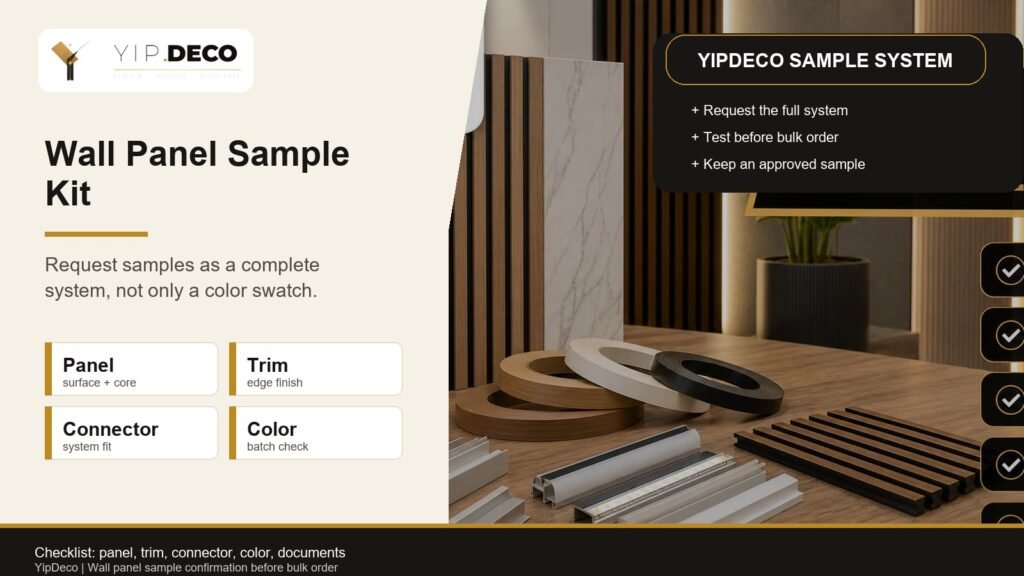
At minimum, a practical wall panel sample kit should include the following.
1. Production-Representative Wall Panel Samples
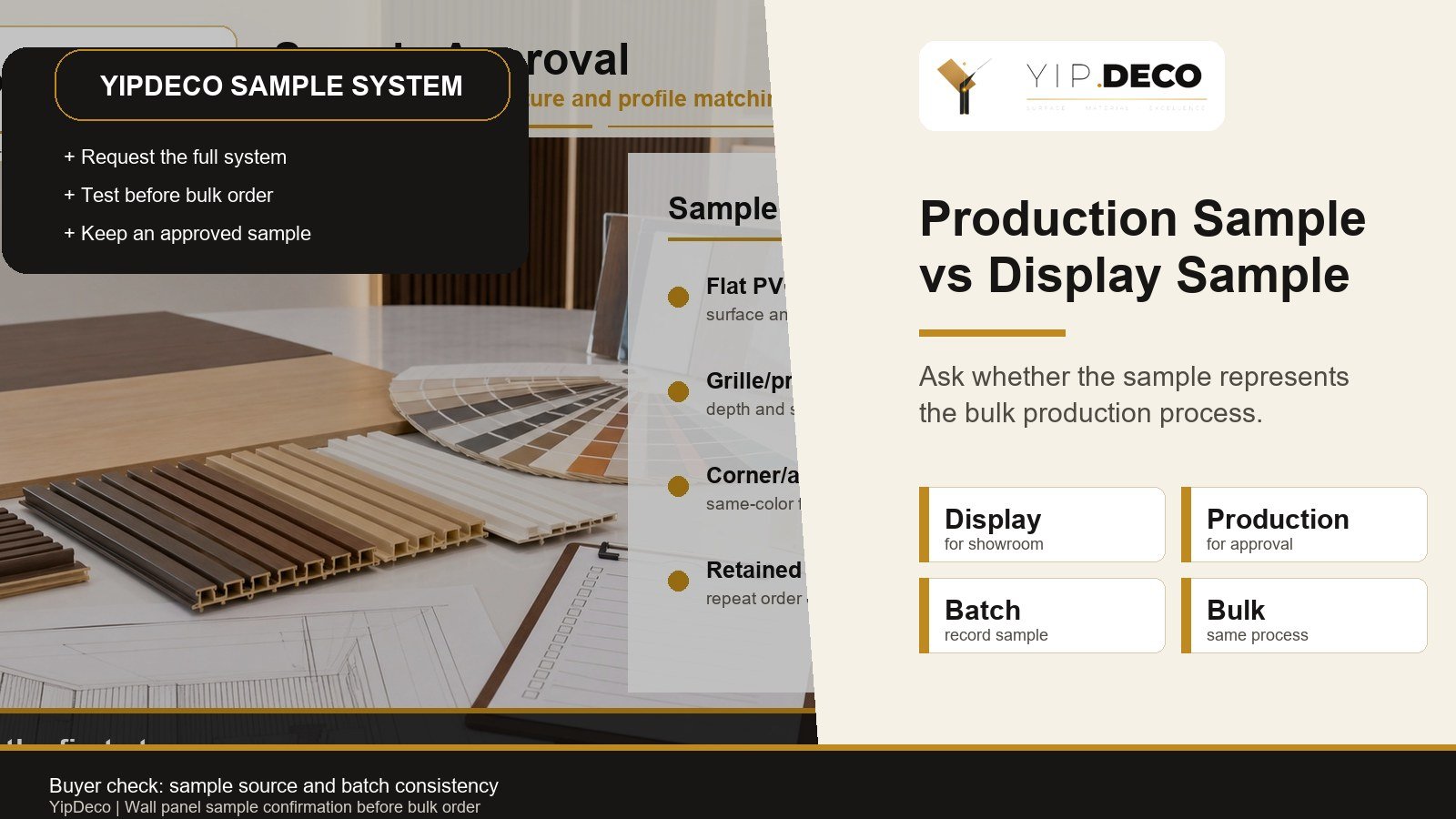
The first item is obvious: wall panel samples. But the key question is not whether the supplier can send a beautiful sample. The key question is whether the sample represents the product that will be produced in bulk.
Ask the supplier:
- Is this a production-run sample or a display sample?
- Is it made with the same surface film, base material, coating, and lamination process as the bulk order?
- Is the thickness the same as the quoted product?
- Is the surface texture, gloss level, and backing structure the same?
- If the finish is customized, is this a first color proof or a production-confirmation sample?
This distinction matters. Display samples are often prepared to show a finish at its best. Production-representative samples help you understand what the bulk order will actually look and feel like.
For wall panel categories, the sample should also identify the material clearly. A PVC wall panel sample and an SPC wall panel sample may both show decorative surfaces, but they are not used in the same project conditions. Sample evaluation should always connect material type to application environment.
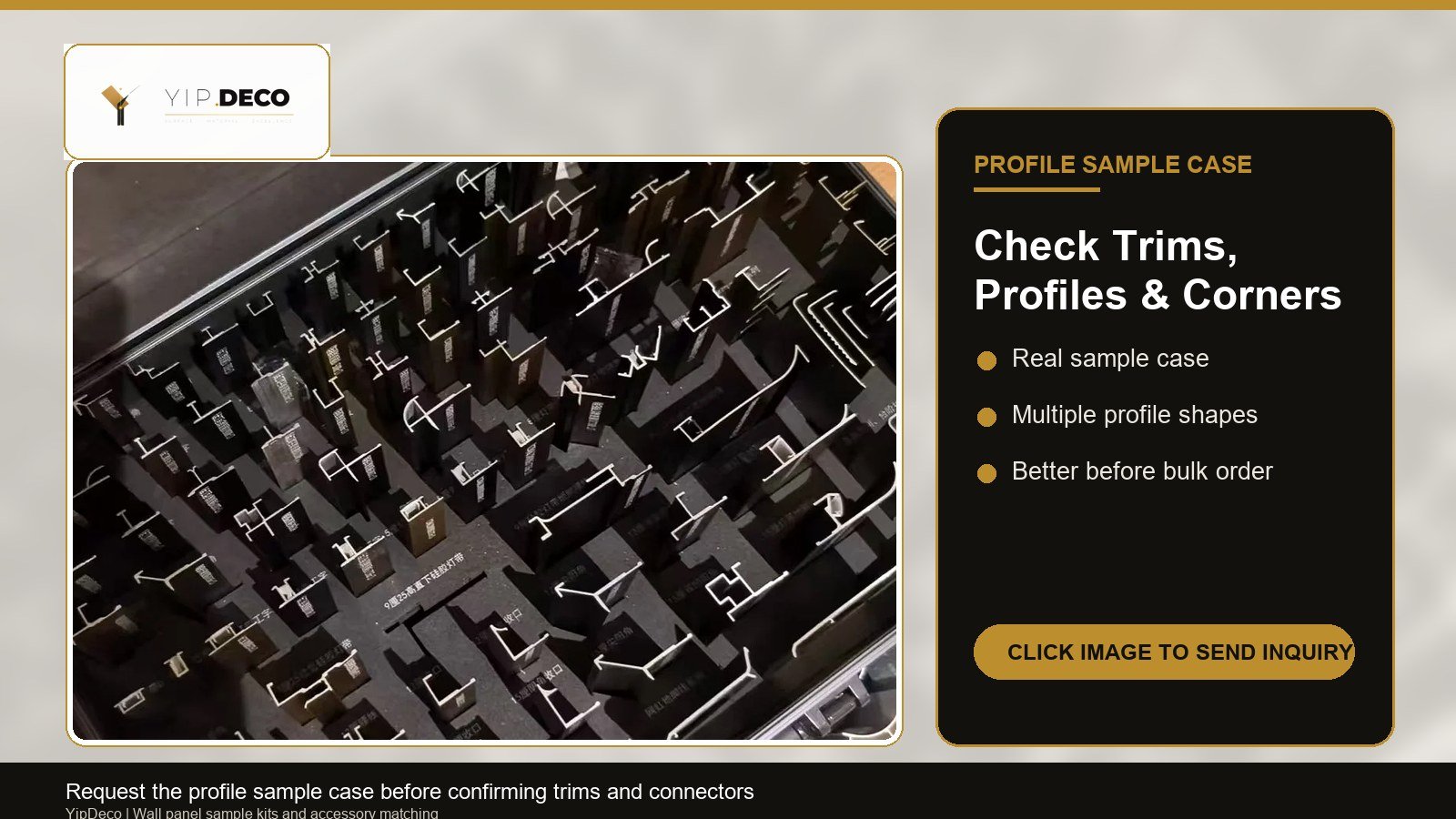
2. Matching Trims, Profiles, and Connectors
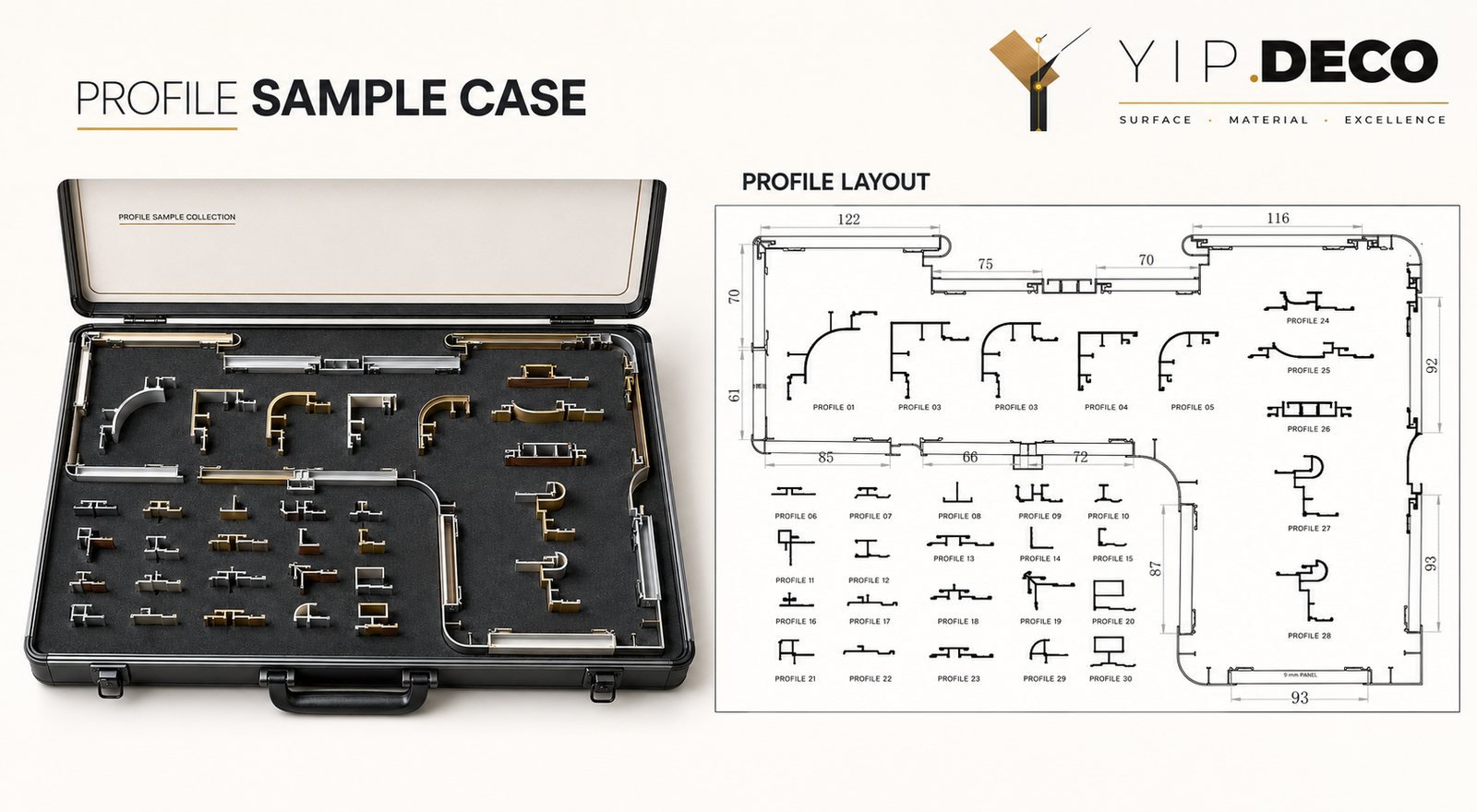
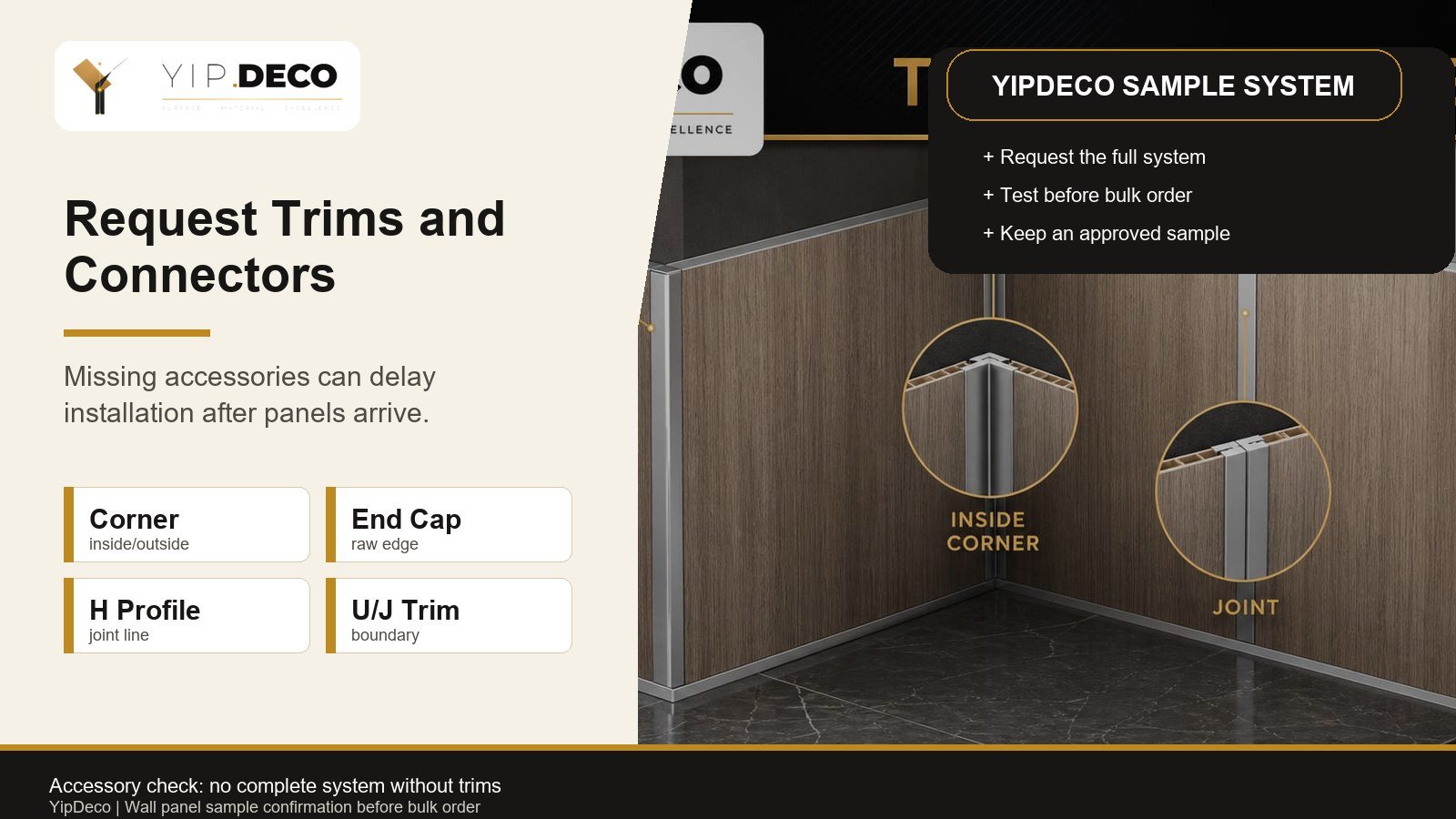
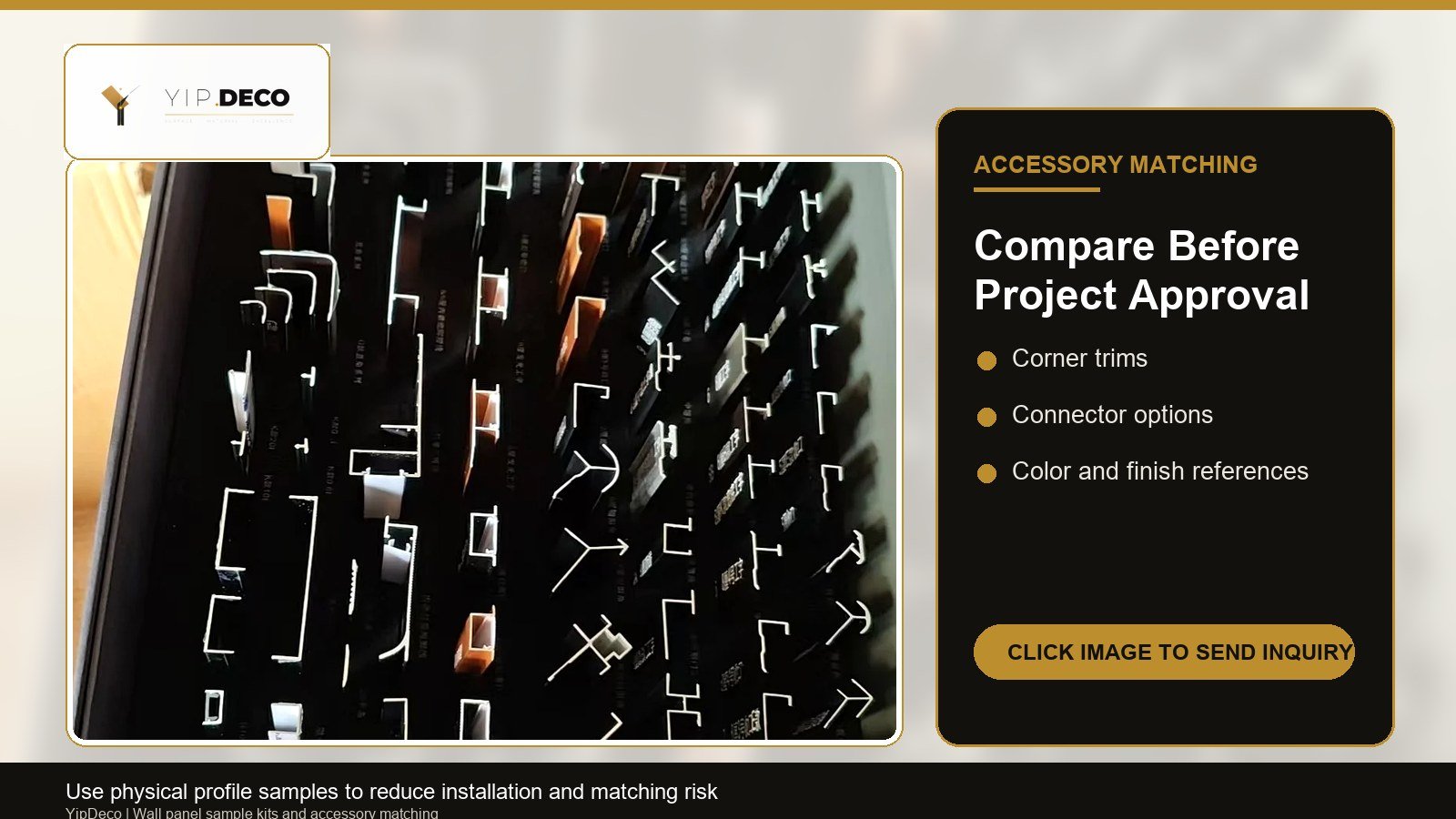
One mistake we see often is that buyers request panel samples only. They do not request the matching trim, corner profile, connector, or installation accessory. Later, when the project moves into installation planning, the accessory color or dimension becomes the problem.
For a complete wall panel system, ask for samples or references for:
- inside corner trims;
- outside corner trims;
- end caps;
- U-shaped or J-shaped receiving profiles;
- H-profile or flat connectors;
- transition trims;
- skirting or edge finishing pieces;
- aluminum profiles if the system uses them.
This is especially important for feature walls, hotel corridors, retail display walls, bathrooms, and commercial renovation projects where the finished edge is highly visible.
YipDeco's Wall Connection Accessories page is a useful reference for understanding why panels, trims, and connectors should be evaluated together. The accessory is not a small add-on. It determines whether the installation looks complete.
3. Grille or Moulding Samples If the Project Uses Texture
If the project includes decorative rhythm, vertical lines, acoustic-style feature walls, or shadow detail, request Mouldings & Grille samples at the same time as the main flat panels.
Do not evaluate grille panels only from catalog images. The profile depth, groove spacing, surface texture, and lighting angle can change the appearance significantly.
For grille or slat wall panels, check:
- profile depth and spacing;
- wall coverage width;
- corner finishing method;
- connector compatibility;
- whether the color matches the flat panels;
- whether LED profile integration is required.
If a buyer evaluates a flat panel first and adds grille panels later, the final wall system may feel disconnected. For commercial interiors, the design often depends on the relationship between flat panel, grille panel, trim, and lighting.
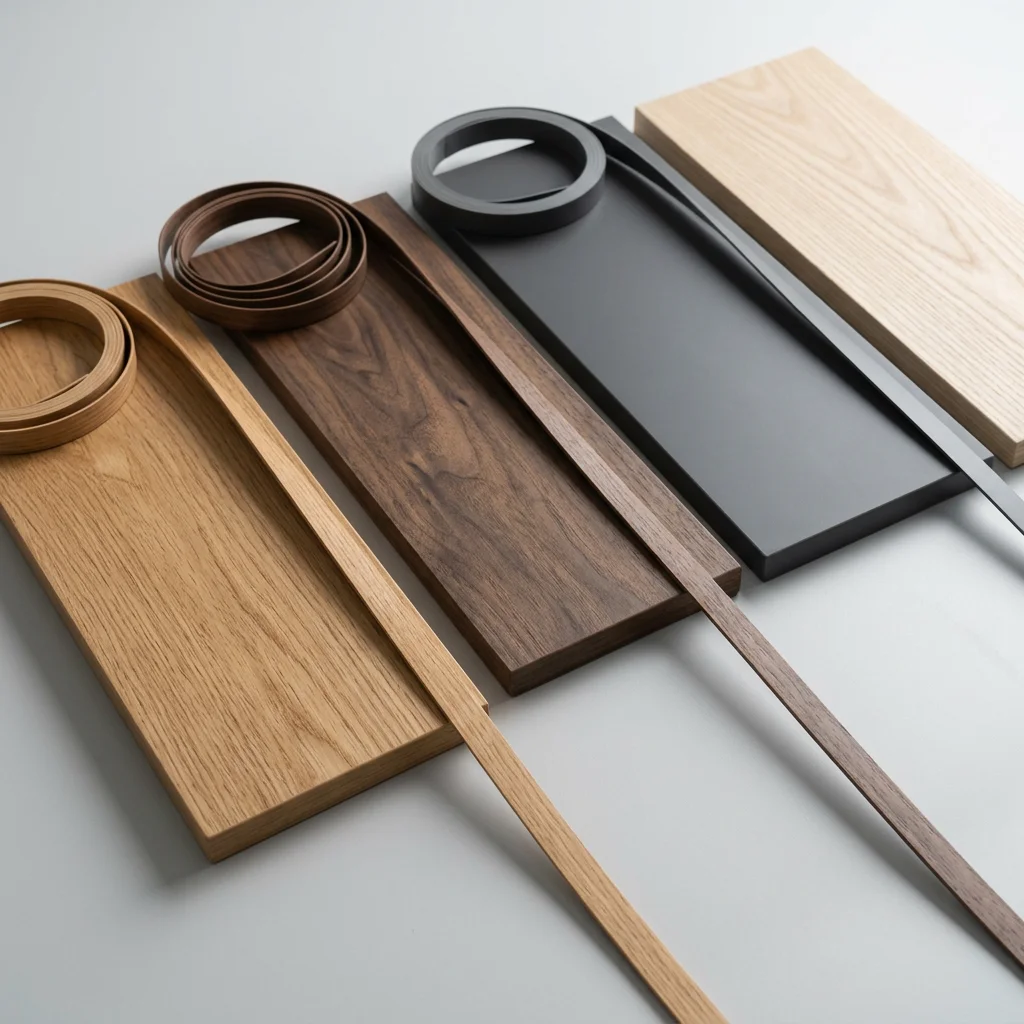
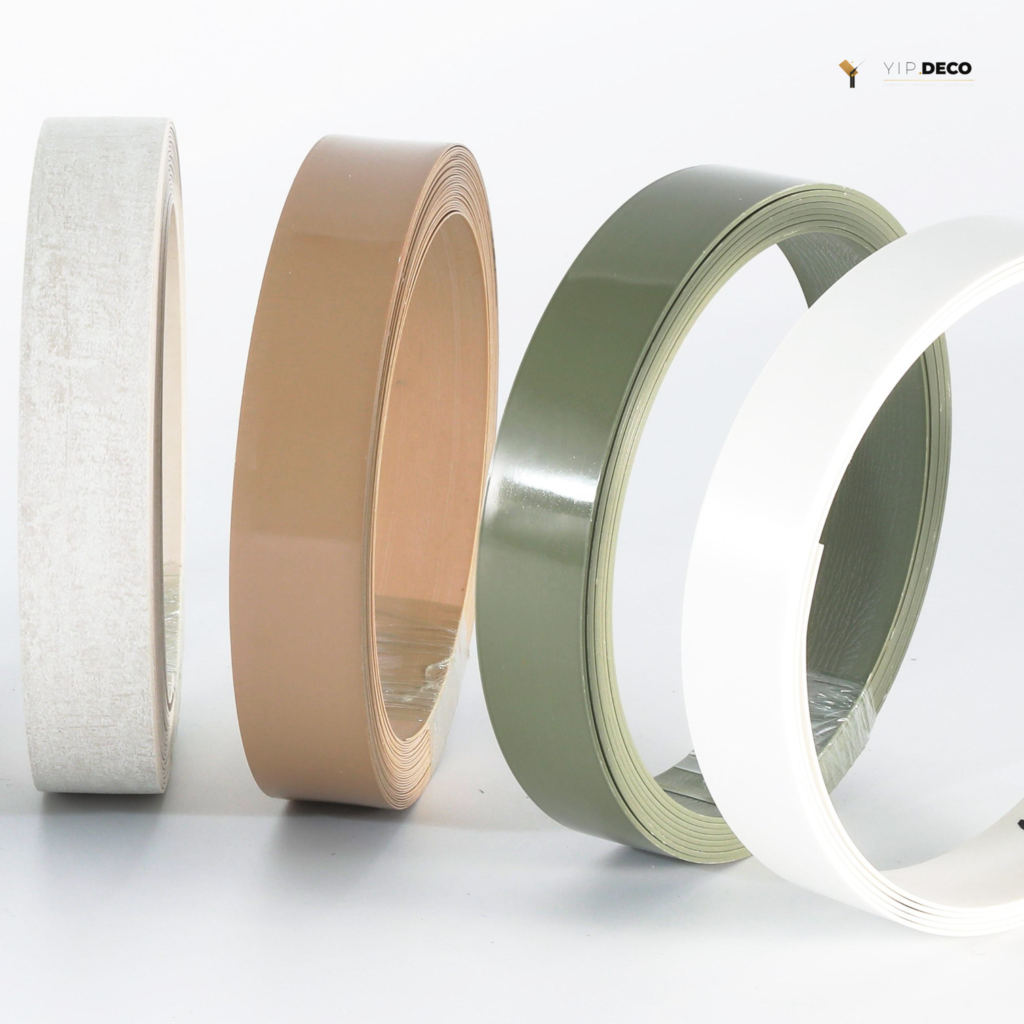
4. Edge Banding or Matching Cabinet Materials
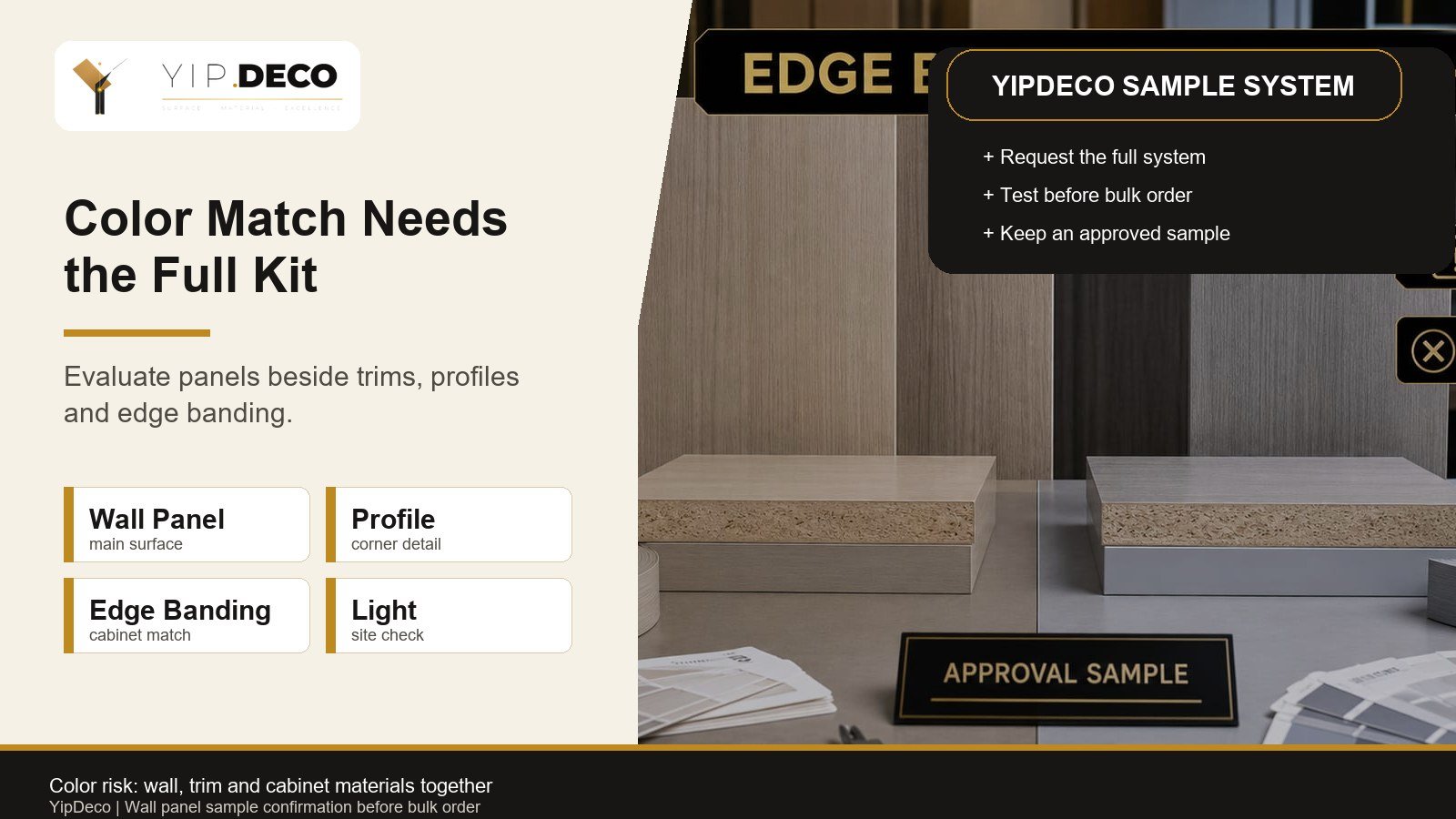
Wall panels are often installed near cabinets, reception counters, retail fixtures, shelves, doors, and built-in furniture. If the project requires a coordinated interior, the sample kit should include matching edge banding or cabinet surface references.
This is where color mismatch becomes very visible.
A wall panel may look acceptable by itself. But once it sits beside a cabinet front, edge banding strip, or built-in shelf, a small difference in undertone or gloss can become obvious. This is why sample evaluation should include adjacent materials, not only the wall panel.
For buyers working across both wall and cabinet systems, request:
- wall panel sample;
- matching edge banding strip;
- surface foil or cabinet finish sample;
- trim and connector sample;
- reference code or color family name;
- batch or color approval record where available.
This is also where YipDeco's coordinated material system can help. A shared color library across wall panels, profiles, edge banding, and decorative surfaces reduces the chance that the buyer approves one material but discovers mismatch in another.
5. Compliance and Technical Documents
Samples should not arrive alone if the buyer is sourcing for a regulated market or commercial project. Ask what documents can be provided with the sample or before bulk confirmation.
Depending on the product and market, useful documents may include:
- product specification sheet;
- material composition information;
- fire-retardant information where applicable;
- formaldehyde or VOC-related documentation where applicable;
- waterproof or moisture-resistance description;
- installation guide;
- packing information;
- cleaning and maintenance guidance;
- color or finish confirmation record.
Do not ask for every certificate in the world. Ask for the documents that match your target market and project requirement. A hotel project, bathroom renovation project, retail chain project, and residential distributor order may each require different documentation. If the buyer sells into the EU, chemical compliance questions may also appear, so it is useful to understand the basic scope of the EU REACH Regulation before confirming document requirements with the supplier.
If the supplier cannot explain which documents are relevant, that is also useful information. For factories and regular import programs, quality-management language also matters. ISO describes ISO 9001 as a quality management standard for organizations of any size. A certificate alone does not prove that every sample will match every bulk order, but it gives buyers one more reason to ask how the supplier controls samples, production references, inspection records, and repeat orders.
How to Evaluate Wall Panel Samples After You Receive Them
Receiving samples is only the beginning. The evaluation process should be systematic. A sample that is only placed on a desk and checked visually has not been fully used.
1. Check Color Under Realistic Lighting
Color should be checked under more than one light condition.
At minimum, evaluate the sample:
- near a window with natural light;
- under warm indoor lighting;
- under cool white lighting;
- beside the materials it must match;
- in the actual project environment if possible.
This matters for wood grain, stone, high-gloss, mirror, metallic, and dark colors. Some finishes look stable in a sample box but shift when installed across a large wall surface. In professional color control, tools such as Delta E are used to discuss visible color difference more objectively; Konica Minolta explains Delta E as a way to quantify color difference instead of relying only on subjective phrases like "slightly lighter" or "a little more yellow."
For commercial projects, we prefer buyers to keep an approved physical reference sample. Digital photos are useful for communication, but they should not replace physical confirmation.
2. Compare Surface Texture, Gloss, and Direction
Texture and gloss are easy to ignore until the panel is installed.
Check:
- Does the texture direction match the intended wall layout?
- Is the gloss level consistent across samples?
- Does the surface look too reflective for the project lighting?
- Is the embossed texture deep enough or too aggressive?
- Does the surface collect visible fingerprints?
For hotel rooms, retail walls, and office feature walls, the visual effect after installation depends heavily on gloss and texture direction. A buyer should not approve a wall panel only because the color code looks correct.
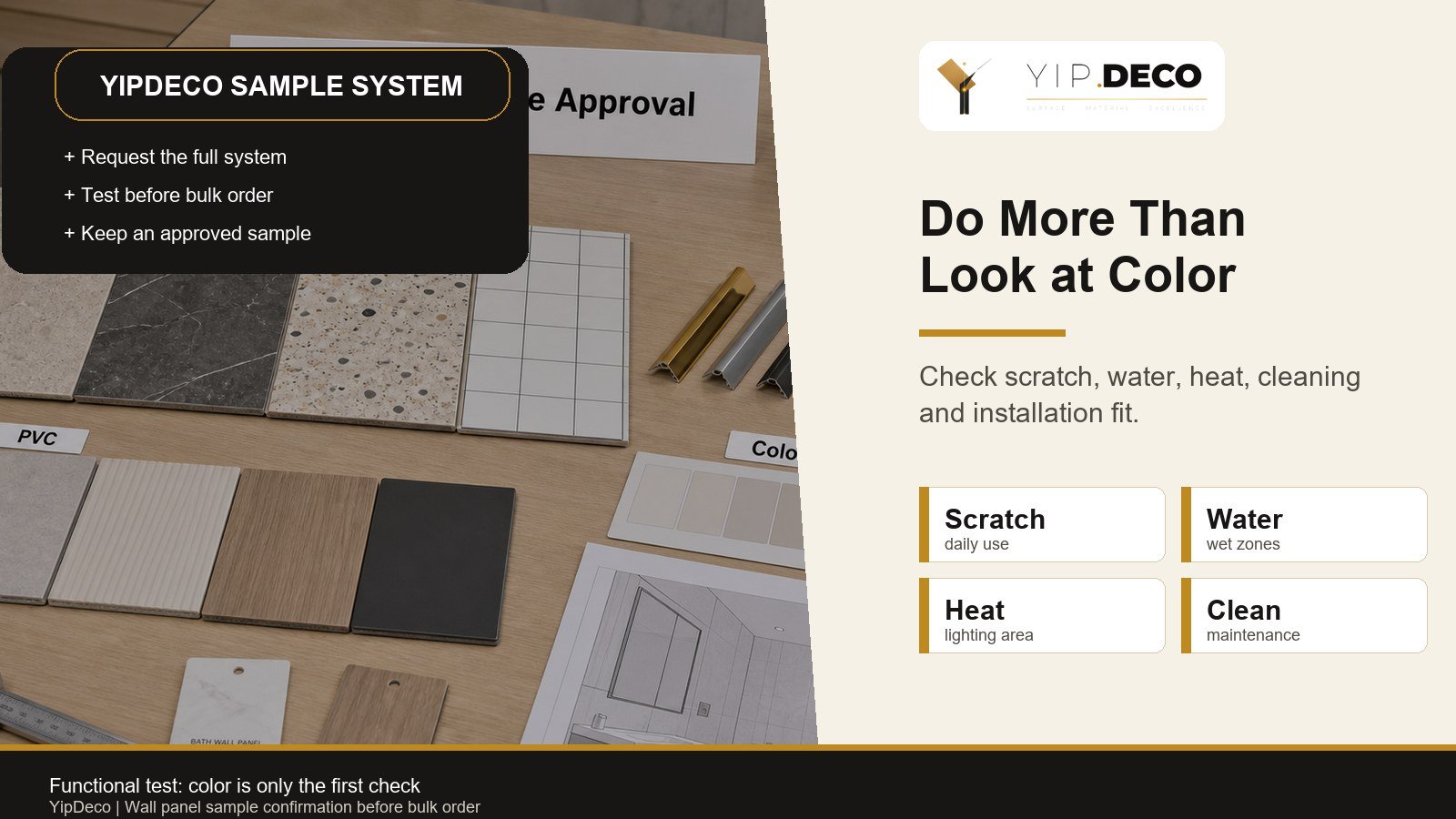
3. Do Simple Functional Checks
The goal is not to turn every buyer into a laboratory. But before bulk order, simple functional checks can reveal whether the material fits the intended environment.
Depending on the application, test:
- scratch resistance with normal handling;
- surface cleaning with a damp cloth;
- water contact for wet or humid areas;
- heat exposure if used near lighting or warm equipment;
- edge stability;
- surface adhesion at corners or cut edges.
For dry decorative walls, the evaluation standard may be different from bathroom or high-traffic commercial walls. Match the test to the environment.
If the project is moisture-heavy, compare whether PVC, SPC, or another wall panel type is suitable before approval. A sample kit should help the buyer choose correctly, not just confirm the prettiest surface. Moisture is not a small detail in wall materials. The U.S. EPA notes that moisture control is central to mold control, which is why wet-area panel decisions should start from the installation environment, not only from price or surface design.
4. Test the Full System, Not Only the Panel
Install a small mockup if the project is important.
Even a simple board mockup can show whether the trim fits, whether the connector aligns, whether the corner looks clean, and whether the finish works beside adjacent materials.
A useful mockup might include:
- one main wall panel;
- one trim or edge profile;
- one connector;
- one grille or moulding piece if used;
- one edge banding strip or cabinet material sample;
- the lighting condition that will be used in the space.
This is the point where many hidden problems become visible. If the system does not look clean at sample scale, it will not improve at project scale.
5. Confirm MOQ, Packing, and Lead Time Before Final Approval
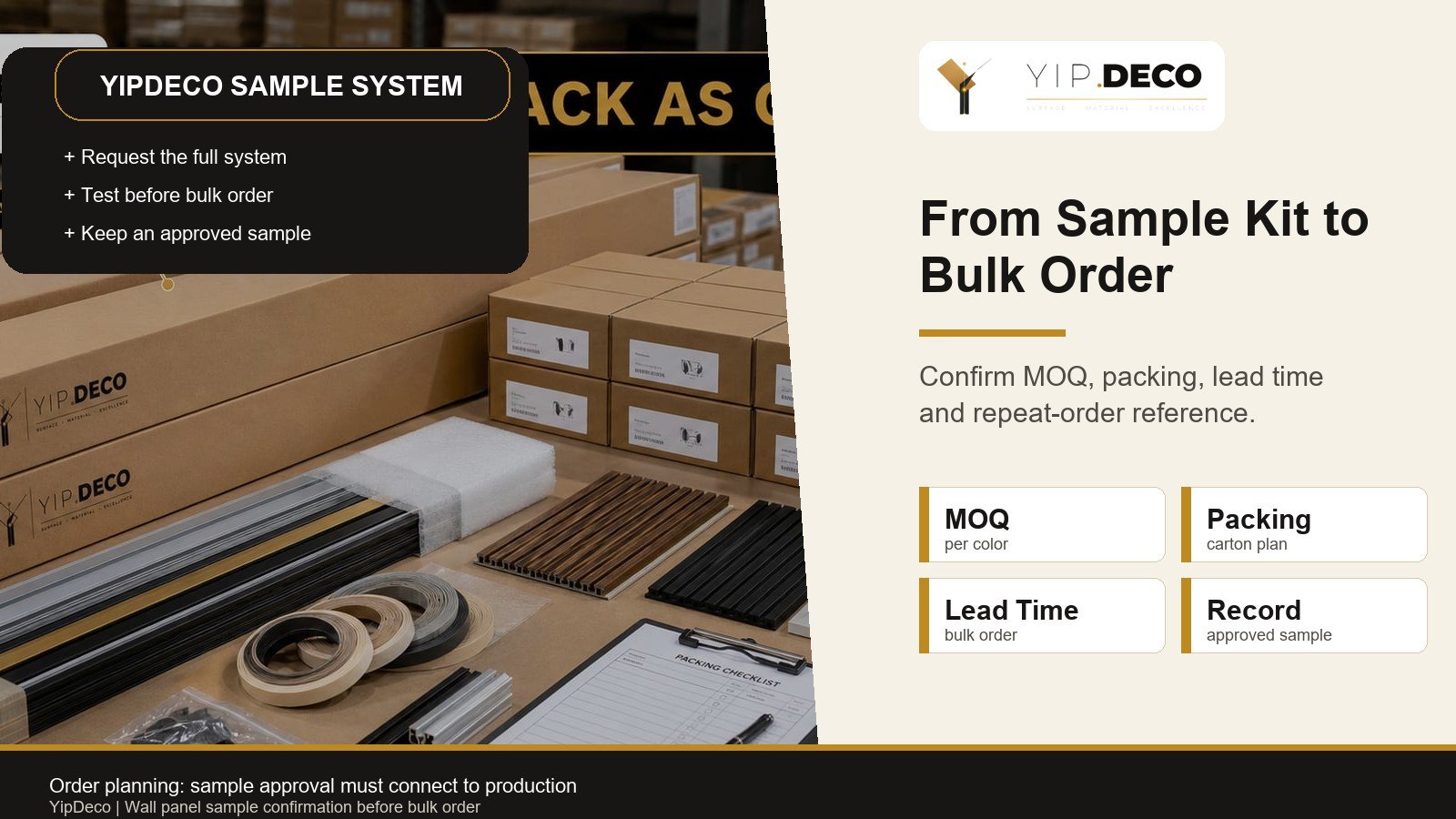
Sample approval should not be separated from order planning.
Before you approve the sample, confirm:
- MOQ per color or finish;
- whether mixed colors can be combined;
- lead time for standard and custom samples;
- lead time for bulk production;
- packing method;
- carton size and loading plan;
- whether accessories ship with panels or separately;
- whether repeat orders can use the same approved color reference.
For first-time importers, the sample stage is also the best time to clarify whether a supplier can support trial orders, mixed containers, or project-specific packing requirements.
Common Mistakes Buyers Should Avoid
The sample stage is valuable only if the buyer uses it correctly.
Avoid these mistakes:
- requesting only one small color piece and calling it a full sample kit;
- approving color without checking gloss, texture, and surface performance;
- forgetting trims, connectors, and edge details;
- comparing samples only under office lighting;
- accepting a display sample without asking whether it represents production;
- ignoring MOQ and lead time until after color approval;
- failing to keep a signed or clearly labeled physical reference sample.
None of these mistakes are unusual. They happen because buyers are often under time pressure. But a rushed sample stage can create a slower bulk order later.
A Practical Wall Panel Sample Kit Checklist
Use this checklist before asking a supplier to send samples:
| Sample item | Why it matters |
|---|---|
| Main wall panel sample | Confirms material, surface, thickness, color, and texture |
| Production-representative sample | Reduces difference between sample and bulk order |
| Matching trims and profiles | Shows whether exposed edges and corners can be finished cleanly |
| Connectors and accessories | Confirms installation compatibility |
| Grille or moulding sample | Helps evaluate texture, shadow, and feature wall effect |
| Edge banding or cabinet material | Reduces color mismatch across wall and furniture systems |
| Technical documents | Supports project approval and compliance review |
| Packing and MOQ information | Connects sample approval to real order planning |
If the supplier can only send a loose panel swatch, that does not mean the supplier is wrong. But the buyer should understand the limitation: a loose swatch can help with early selection, not final project approval.
When Should You Request a Custom Sample?
Standard samples are useful when the buyer is choosing from existing colors or textures. Custom samples are useful when the project requires a specific color, finish, matching code, or brand direction.
Request a custom sample when:
- the project requires a specific wood grain, stone, marble, or solid color;
- the wall panel must match cabinet materials or edge banding;
- the buyer needs a special gloss level;
- the finish will be used across a large visible surface;
- the project owner must approve a physical sample before ordering.
For custom projects, the first sample may not be the final sample. Treat it as a confirmation process. The final approved physical sample should be labeled, stored, and used as the reference for bulk production.
How YipDeco Handles Sample Requests
At YipDeco, sample communication is not only about sending a small piece of material. The goal is to help the buyer confirm the system before order risk becomes expensive.
For wall panel buyers, we can help organize samples across:
- PVC wall panels;
- SPC wall panels;
- mouldings and grille panels;
- wall connection accessories;
- matching edge banding and decorative surface materials.
Where customization is required, YipDeco can support custom sample preparation and physical color confirmation. The exact sample scope depends on the buyer's application, material type, target market, and project timeline.
Start from the Sample Kits page if you already know what materials you want to compare. If your project includes multiple wall zones, accessories, and cabinet matching, send the project requirement through Contact YipDeco so the sample kit can be organized around the real application.
Final Thought
A wall panel sample kit should help you answer one question: if we order this material in bulk, what problems can we prevent now?
The best sample process does not slow down sourcing. It prevents the wrong material, wrong accessory, wrong color, or wrong expectation from reaching the bulk order stage.
Before ordering wall panels for a commercial interior project, request the full system, evaluate it in the right environment, test what matters for the application, and keep a physical approval reference. That is how a sample kit becomes a procurement tool instead of a box of attractive pieces.